


Transport for People in Wheelchairs: Your Guide to Safe Medical Rides

When you or a loved one uses a wheelchair, getting to medical appointments, hospital discharges, or dialysis sessions shouldn't feel stressful or complicated. The right transport for people in wheelchairs makes all the difference — and it's very different from hailing a regular rideshare app.
This guide walks you through how wheelchair transportation actually works, what makes it safe and reliable, and how to find the right service for your needs.
What Is Specialized Wheelchair Transportation?
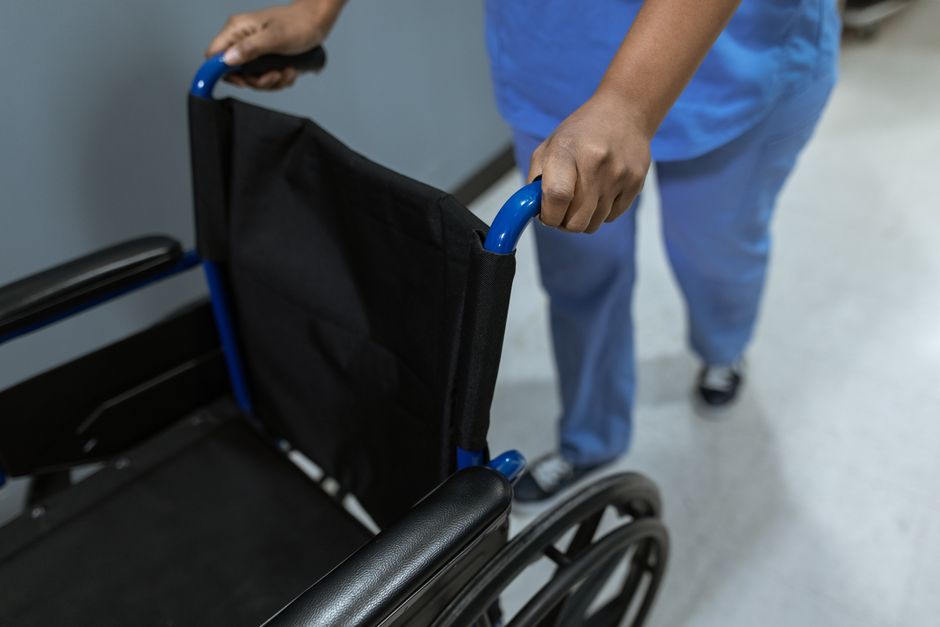
Transport for people in wheelchairs is a medical-grade service designed specifically for individuals who use wheelchairs, mobility devices, or need assistance during travel. Unlike a standard rideshare, these vehicles have built-in hydraulic lifts, secure wheelchair positioning systems, and trained staff who understand how to safely move someone with mobility challenges.
The goal is simple: get you from point A to point B without manual transfers, without risk of injury, and with your dignity and comfort as the priority.
A proper wheelchair transportation service focuses on three things:
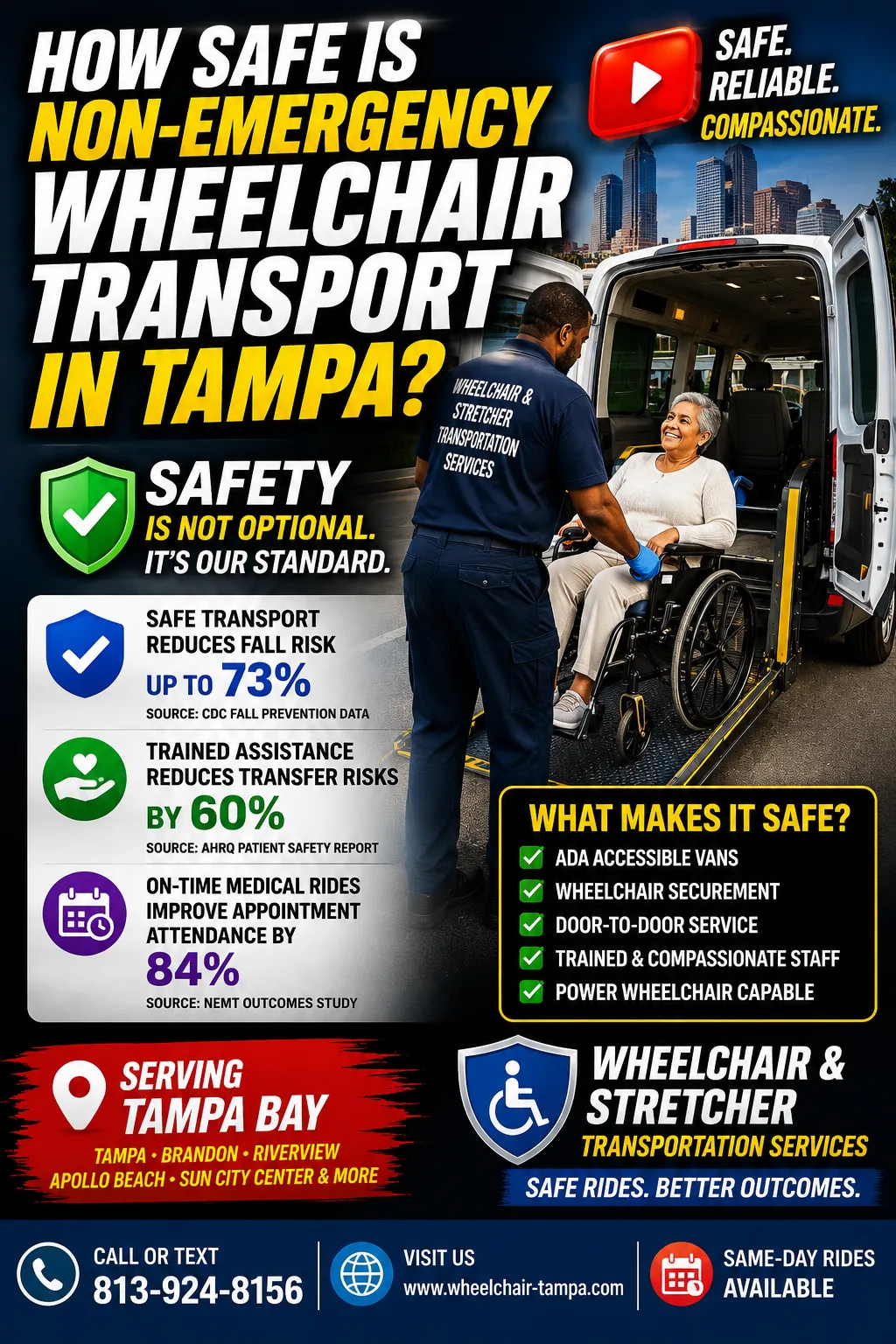
Safe, smooth boarding using hydraulic equipment (no lifting by hand)
Secure positioning during the ride so your wheelchair doesn't shift
Trained staff who know how to work with different mobility devices and physical needs
Why Regular Rideshare Apps Don't Work for Wheelchair Users
You might think you could just order an Uber or Lyft and ask the driver to help. Here's why that's not safe.
Most consumer rideshare vehicles have no wheelchair lift, no secure tie-down system, and drivers receive no medical training. A driver might try to manually lift your wheelchair into the trunk, which risks injury to you and them. Your chair could slide around during braking. There's no accountability if something goes wrong.
Medical wheelchair transportation is different. Vehicles are inspected, equipment is maintained, and staff are trained in patient safety protocols. You're not asking a favor — you're booking a service built for exactly this purpose.
Key Features of Safe Wheelchair Transport
When you call a professional wheelchair transportation provider, here's what you should expect.
Hydraulic Lifts or Ramps Your wheelchair is raised or rolled onto the vehicle smoothly using mechanical equipment, not human strength. This protects your body and reduces the risk of tipping or dropping.
Wheelchair Securement Systems Once aboard, your wheelchair is locked into place using straps or clamps. It won't move during turns, braking, or acceleration. You stay stable the entire ride.
Spacious Vehicle Interior The interior is wide enough to maneuver a wheelchair without cramping. There's room to breathe and move comfortably.
Trained, Professional Staff Drivers and attendants know how to communicate with you, operate the equipment correctly, and handle any medical or mobility questions that come up. They work with wheelchair users every day.
Reliability and Scheduling You can book appointments ahead of time and count on the service to show up. No guessing if a driver will accept your ride.
When Do You Need Wheelchair Transport?
Wheelchair transportation makes sense for many situations. Here are the most common:
Medical appointments (doctor visits, specialist consultations)
Hospital discharges when you're not ready to drive yourself
Dialysis sessions that happen on a regular schedule
Physical therapy or rehabilitation visits
Rides home after surgery or procedures
Ongoing mobility needs when you don't have a family member available to drive
If you need a ride and using your own vehicle or relying on a friend feels risky or impossible, wheelchair transportation is worth exploring.
Stretcher Transport vs. Wheelchair Transport
Some people need stretcher transport instead of (or in addition to) wheelchair transport. Here's the difference.
Wheelchair Transport You remain seated in your own wheelchair throughout the journey. The chair is secured in the vehicle. You're upright and engaged.
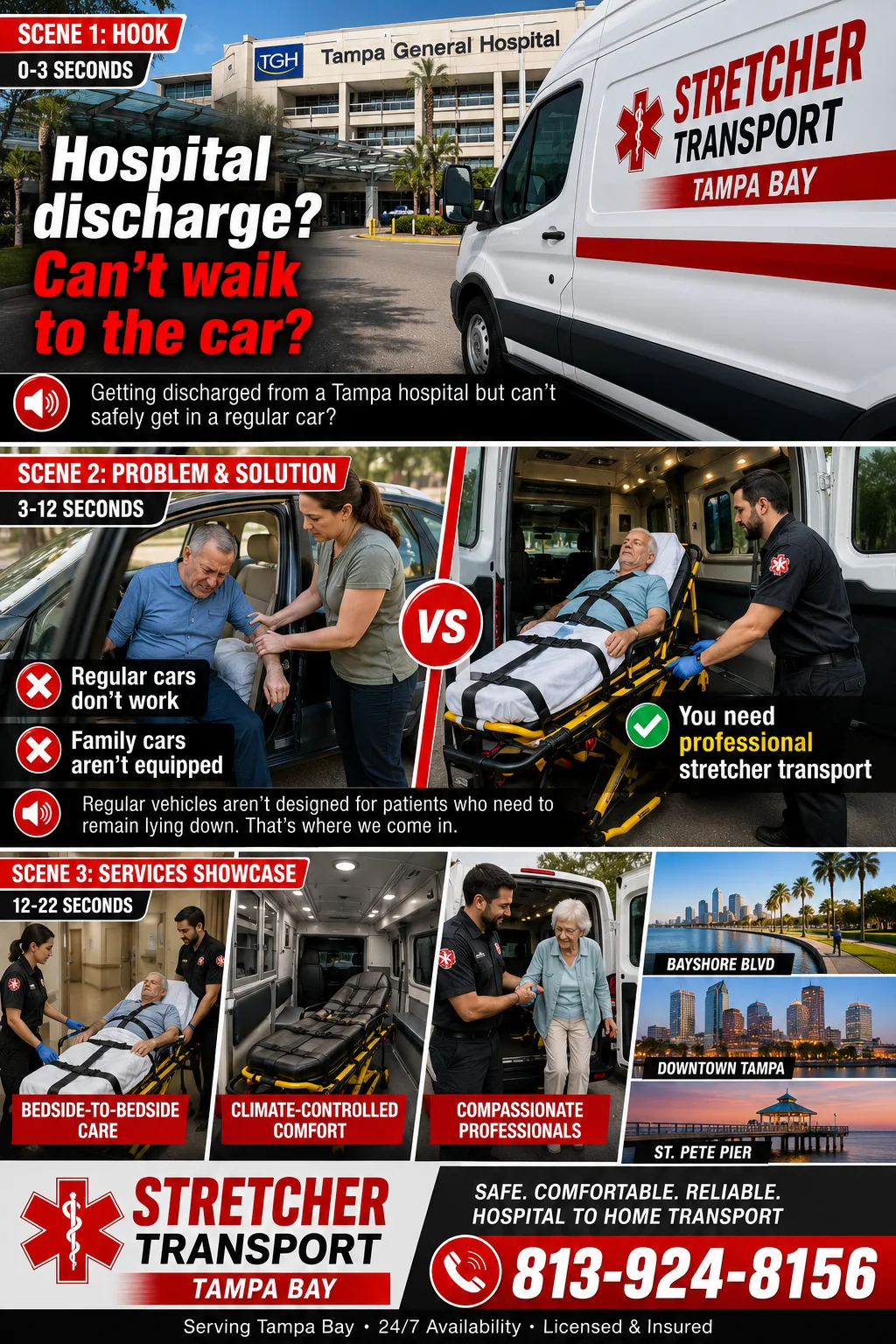
Stretcher Transport You're moved from your wheelchair (or bed) onto a gurney-style stretcher and transported lying down. This is used when you can't safely sit upright, have recent surgery, or need to stay reclined for medical reasons. Stretcher transports use a two-person crew and provide bedside-to-bedside service — they pick you up and drop you off at your actual destination, not just the front entrance.
The right choice depends on your medical condition and mobility level. Wheelchair Tampa can help you figure out which option suits your situation best.
Need wheelchair transportation?
How to Book Wheelchair Transport in the Tampa Bay Area
Ready to arrange a ride? Here's the process.
Step 1: Call and Describe Your Needs Contact your transportation provider and explain where you're going, when, and any special medical or mobility requirements. Mention if you use a wheelchair, mobility scooter, walker, or other devices.
Step 2: Confirm Your Service Area Make sure the provider serves your location. Not all transportation services cover the same counties. Wheelchair Tampa operates in Hillsborough, Polk, Manatee, Highlands, and Hardee Counties, so confirm you're in a covered area before booking.
Step 3: Ask About Payment Understand upfront how the service is paid. Some providers bill insurance or Medicaid; others are private pay only. Wheelchair Tampa is private pay only and does not accept Medicaid, Medicare, or insurance.
Step 4: Get a Quote Ask for pricing information. The cost depends on distance, type of transport, and other factors. Call for a custom quote rather than guessing online.
Step 5: Schedule Your Ride Provide your pickup address, destination, preferred date and time, and any accessibility or medical notes. Confirm the arrival time and driver information before the appointment.
What to Prepare Before Your Ride
A few simple things make the experience smoother.
Have your address and destination ready, including suite or building numbers
Be ready 10-15 minutes before your scheduled pickup
If you have medical equipment (oxygen, catheter bag, etc.), mention it when booking
Communicate any mobility limitations or pain points so the staff can help safely
Bring your ID and any insurance or medical records you need for your appointment
Private Pay vs. Insurance-Billed Transportation
You'll encounter two main payment models when shopping for wheelchair transport.
Insurance-Billed Services Some non-emergency medical transportation providers bill your insurance, Medicaid, or Medicare directly. This can lower your out-of-pocket cost if you qualify, but approval can be slow and eligibility varies.
Private Pay You pay the provider directly at the time of service. No waiting for insurance approval. Wheelchair Tampa operates on a private pay model, which means faster scheduling and no hassle with insurance paperwork. You know exactly what you're paying and when.
Private pay is especially useful if you need a ride quickly, if insurance won't cover it, or if you prefer simplicity.
Common Questions About Wheelchair Transportation
Can I bring a family member or caregiver along?
Yes. Most wheelchair transportation vehicles have room for a passenger or care attendant. Let the provider know when you book so they can plan seating accordingly.
What if I use a mobility scooter instead of a wheelchair?
Mobility scooters can often be transported, but equipment and space vary by vehicle. Call ahead and describe your scooter so the provider can confirm it fits and secure it properly.
Can I cancel or reschedule my ride?
Most providers allow cancellations or rescheduling with advance notice. Ask about the cancellation policy when you book. Last-minute changes may have fees or restrictions.
What if my appointment runs late — can the driver wait?
Some providers offer waiting time or return pickup at a set time. Ask about this option when booking, especially for medical appointments that sometimes run over. You may pay an additional fee for extended waiting time.
Need wheelchair transportation?

Comments