


Medical Transportation for Wheelchair Users in Florida: Your Guide

Medical transportation for wheelchair users in Florida isn't something you should leave to chance. Whether you're heading to a doctor's appointment, coming home from the hospital, or need regular dialysis rides, you need a service that understands your mobility needs and handles your safety with real expertise.
In this guide, we'll walk you through what medical transportation actually looks like, what makes it different from a regular rideshare, and how to find the right provider for your situation.
What Is Medical Transportation for Wheelchair Users?
Medical transportation is specialized transport designed specifically for people with mobility limitations. It's not the same as calling a taxi or rideshare app.
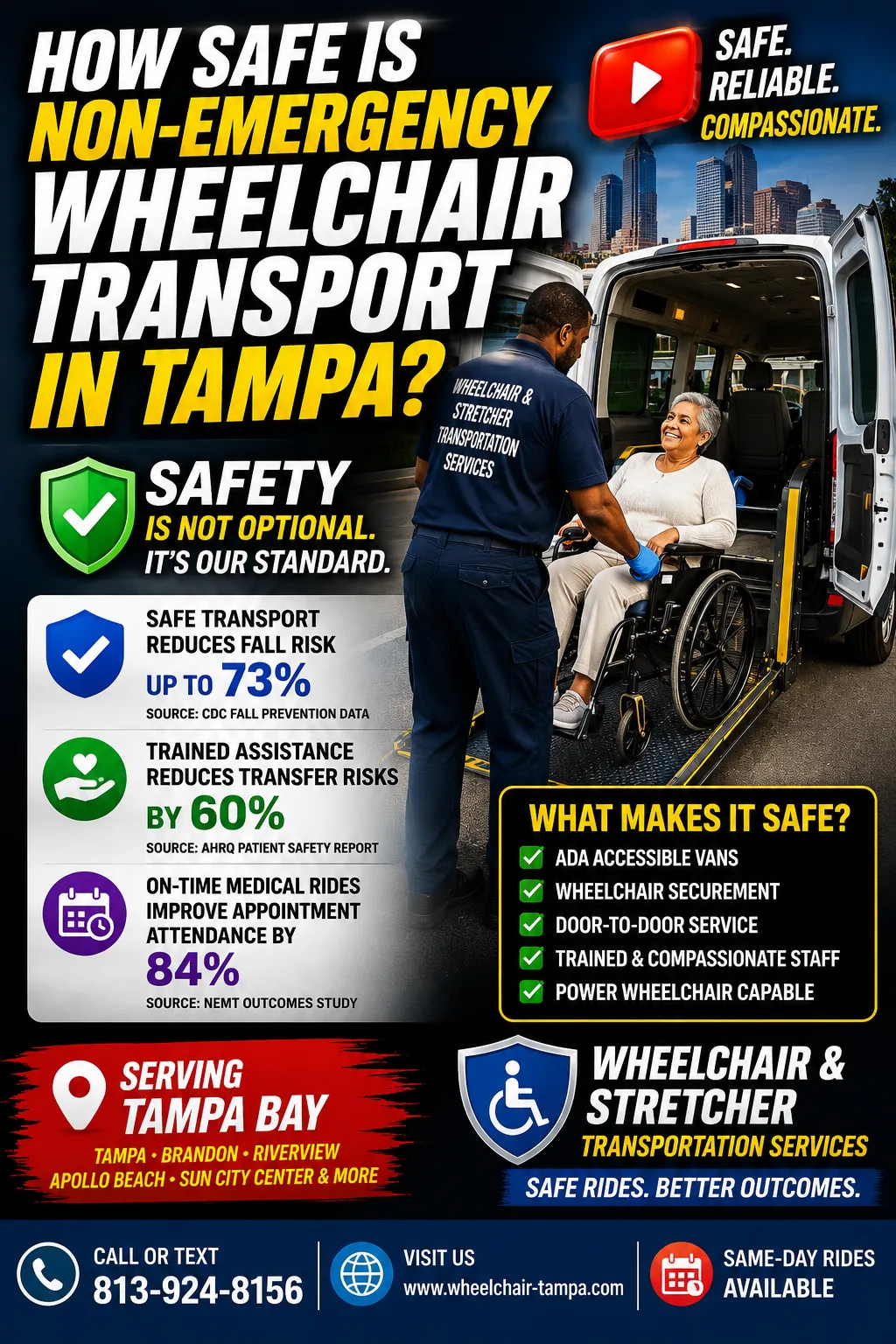
Real medical transportation includes vehicles equipped with hydraulic lifts or ramps, securement systems to keep your wheelchair locked in place safely, trained operators who know how to assist passengers, and vehicles that are inspected and maintained to medical standards. The goal is to get you to your appointment or home safely, without stress, and with dignity.
In Florida, Wheelchair Tampa provides exactly this kind of service across the Tampa Bay region and surrounding counties. Their wheelchairs are secured properly, drivers are trained in patient assistance, and the whole operation is built around your safety, not just speed or convenience.
Types of Medical Transportation Available
Not all wheelchair users need the same kind of transport. That's why good providers offer options.
Wheelchair Van Transport is the most common option. Your wheelchair stays with you. The vehicle pulls up, a hydraulic lift or ramp lowers to your level, your chair gets secured into the vehicle's securement system, and you're transported safely to your destination. The driver can assist you in and out if needed.
Stretcher Transport is for people who cannot sit upright or need full-body support. A specialized stretcher vehicle arrives with a two-person crew who can transfer you safely from your bed or home to the stretcher, transport you, and then move you bedside at your destination. This is real medical-grade transport, not an ambulance with lights and sirens, but serious equipment and training.
Ambulatory Transport is for people who can walk or stand with minimal assistance but still need specialized vehicles with grab rails, ramps, and trained drivers for safety.
The type you need depends on your mobility level, your medical condition, and your specific situation. When you contact a provider, be honest about what you need so they can send the right vehicle.
Private Pay vs. Insurance-Based Medical Transportation
Here's something important to understand: not all medical transportation is billed to insurance or Medicaid.
Some transportation services in Florida are private pay only. That means you pay directly, and there's no insurance processing, no waiting for approvals, and no coverage limits. Wheelchair Tampa operates on a private pay model, which means fast booking, reliable scheduling, and no hassle with insurance paperwork.
Need wheelchair transportation?
Private pay services often work best for:
Hospital discharge transportation (when you need to get home immediately)
Regular dialysis or treatment appointments
Doctor visits and specialist appointments
Trips that insurance won't cover
People who simply prefer direct payment and no insurance delays
If you're looking for insurance-covered transportation, you'll want to check with your insurance company or Medicaid directly. But if you need reliable, dependable transport right now, private pay services give you direct control over your booking and timing.
Service Areas Matter
Not every medical transportation provider covers all of Florida. Coverage depends on the company and their operational footprint.
If you're in the Tampa Bay area or surrounding regions, you have options. If you're elsewhere in Florida, you'll need to check who actually serves your county.
Wheelchair Tampa serves Hillsborough, Polk, Manatee, Highlands, and Hardee Counties. If you're in these areas and need medical transportation, they can help. If you're outside this service area, you'll need to find a local provider in your region.
How to Book Medical Transportation
Booking should be simple and straightforward. Here's what to expect:
Step 1: Call and Describe Your Needs
When you call, be ready to tell the provider:
Where you need to go and when
Your mobility level (do you use a wheelchair, walker, or cane?)
Whether you need assistance getting in and out of a vehicle
Any medical equipment you'll be bringing (oxygen, dialysis supplies, etc.)
Whether this is a one-time trip or recurring appointments
Step 2: Get a Quote
Ask what the cost will be. Pricing depends on distance, vehicle type, whether it's a one-way or round trip, and whether you need assistance. Most providers will quote you over the phone or after a brief assessment.
Step 3: Confirm Scheduling
Book your appointment with pickup times that work for you. Good providers will confirm the day before and arrive on time.
Step 4: Prepare for Transport
Make sure you have any medical documents, insurance cards, or appointment information ready. If you need help getting ready, ask family or a caregiver to be present. Be ready to go at your scheduled pickup time.
What to Expect During Your Ride
When the vehicle arrives, the driver will introduce themselves and explain what's about to happen. They'll help you transfer into the vehicle, secure your wheelchair, and make sure you're comfortable before driving.
During the ride, the driver focuses on safe driving. You can ask questions, use your phone, or relax. When you arrive at your destination, the driver will help you out and may assist you to the entrance, depending on your needs and their service level.
For stretcher transport, the process is similar but more involved. A two-person crew will handle your transfer from bedside to stretcher, the ride, and then from stretcher to your destination. This kind of care requires training and experience, which is why specialized providers exist.
Why Medical Transportation Matters
You might be wondering: why not just ask a family member to drive me, or why not use a regular taxi?
The truth is, wheelchair users have specific safety needs that regular vehicles and untrained drivers can't meet. A poorly secured wheelchair during a sudden stop can cause serious injury. A driver who doesn't know how to operate a lift can damage equipment or hurt you. Unmarked vehicles don't have the safety features or backup plans that specialized medical transport does.
When you use Wheelchair Tampa or another quality medical transportation provider, you're choosing reliability, safety, and peace of mind. You know the vehicle is equipped properly. You know the driver is trained. You know if something goes wrong, there's accountability and a protocol to handle it.
That matters, especially if you're recovering from surgery, managing a chronic condition, or just need to get to an appointment without stress.
Questions to Ask Your Transportation Provider
Before you book, ask these questions to make sure they're right for you:
Do you serve my county or address?
What types of vehicles do you have available?
How are wheelchairs secured during transport?
Are drivers trained in patient assistance?
What's your cancellation policy?
Do you offer same-day or emergency bookings?
What happens if the driver is running late?
Can I bring a family member or caregiver along?
Good providers will answer all of these clearly and honestly. If they seem dismissive or vague, that's a red flag.
Making Medical Transportation Work for You
Medical transportation isn't a luxury. For many wheelchair users, it's essential for independence, health, and getting to the care you need.
The key is finding a provider who takes your safety seriously, shows up on time, treats you with respect, and makes the whole experience stress-free. Wheelchair Tampa specializes in exactly this in the Tampa Bay area and surrounding counties. If you're in their service area, call to learn more about booking. If you're elsewhere, use the questions above to vet a local provider and make sure they meet your needs.
Frequently Asked Questions
Can I bring someone with me during medical transportation?
Yes. Most medical transportation providers allow a family member or caregiver to ride along at no extra charge. This is helpful if you want support, need help at an appointment, or just feel more comfortable having someone with you. Let the driver know in advance if you're bringing someone so they can plan accordingly.
What if I need to reschedule my appointment?
Call your provider as soon as possible. Most services have a cancellation or rescheduling window (often 24 hours). If you cancel within that window, you may have a fee; if you reschedule far in advance, it's usually free. Always read the terms when you book so you know the policy.
Do I need to have a prescription or doctor's note to use medical transportation?
No. Medical transportation is private transportation to medical appointments. You don't need a prescription or referral. Just call, describe what you need, and book. If you're using an insurance or Medicaid-based service, they may require documentation, but private pay services typically don't.
What if I use oxygen or other medical equipment during transport?
Tell the provider upfront. Good medical transportation services are trained and equipped to transport people with oxygen, feeding tubes, dialysis supplies, and other equipment. The driver will make sure everything is secure and safe during the ride. Never hide equipment; always disclose it so the provider can prepare.
Need wheelchair transportation?


Comments