


Certified Home Health Aide & Hospice Support for End-of-Life Care in Sun City Center & Apollo Beach, FL
- Marqus Johnson

- Jan 28
- 11 min read
Updated: Apr 17

End-of-Life Care Guide · Sun City Center & Apollo Beach, FL
By Marqus Willard Johnson, PMP | Updated 2025 | Wheelchair & Stretcher Transportation Services
When a loved one is nearing the end of life, the last thing your family should be thinking about is logistics. You're trying to be present — to hold a hand, to say what needs to be said — not scrambling to coordinate transportation to and from hospice appointments, palliative visits, or skilled nursing facilities. This guide is for families in Sun City Center and Apollo Beach who need to understand their options for certified home health aide support, hospice care, and the medical transportation that holds it all together.
Quick answer
A certified home health aide (CHHA) provides hands-on personal care and daily living support in the home. Hospice care is a specialized comfort-focused program for patients with a terminal prognosis of six months or less, covering medical, emotional, and spiritual needs. In Sun City Center and Apollo Beach, both services can be delivered at home — and reliable non-emergency medical transportation (NEMT) ensures patients reach every appointment they need. Call 813-924-8156 for same-day transport coordination.
What does a certified home health aide actually do?
A certified home health aide (CHHA) is a trained, state-certified caregiver who provides in-home assistance with activities of daily living (ADLs) — the basic tasks that become difficult when someone is seriously ill or declining. Their role is distinct from a registered nurse or home health nurse: they don't administer medication or perform clinical procedures, but they're often the person your loved one spends the most time with each day.
In Florida, CHHAs must complete a state-approved training program and pass a competency evaluation before working in a licensed home health agency. That certification matters — it's the difference between supervised, accountable care and informal help with no quality standard attached.
Day-to-day, a certified home health aide in Sun City Center or Apollo Beach typically provides:
Bathing, grooming, and personal hygiene assistance
Dressing, toileting, and continence care
Mobility assist — helping patients transfer from bed to wheelchair, move safely around the home, or prevent falls
Light meal preparation aligned with dietary restrictions or swallowing limitations
Medication reminders (not administration — that requires nursing licensure)
Companionship and emotional support during what is often an isolating time
Observation and reporting of changes in condition to the supervising nurse or care team
That last point is underappreciated. A good CHHA is often the first person to notice when a patient's condition is shifting — increased confusion, new pain, changes in breathing — and their report to the care team can trigger timely intervention that keeps a patient comfortable and out of the emergency room.
What is hospice care, and who qualifies in Florida?
Hospice care is a Medicare and Medicaid benefit designed for patients with a terminal illness and a prognosis of six months or less if the disease runs its normal course. It's not about giving up — it's about shifting the goal from cure to comfort, and surrounding the patient and family with a coordinated team to make the remaining time as peaceful and dignified as possible.
Under the Medicare Hospice Benefit, a patient who qualifies receives:
Physician oversight and regular nursing visits
Certified home health aide services (personal care, hygiene, companionship)
Social work support for family coping and care coordination
Chaplaincy and spiritual care — for both patient and family, regardless of religious affiliation
Medications related to the terminal diagnosis, covered at no cost
Medical equipment: hospital bed, wheelchair, oxygen, commode — delivered to the home
Respite care: short-term inpatient relief so family caregivers can rest
Bereavement support for the family for at least 13 months after the patient's passing
To elect hospice in Florida, a patient's physician and the hospice medical director must certify the terminal prognosis. The patient (or their healthcare surrogate) signs an election form acknowledging the shift to comfort-focused care. Importantly, a patient can revoke hospice election at any time — it's not a one-way door.
Featured snippet: hospice eligibility
In Florida, hospice eligibility requires a physician certification that the patient has a life expectancy of six months or less if the illness follows its expected course. The patient must also elect the Medicare or Medicaid hospice benefit, agreeing to receive comfort-focused rather than curative treatment. Patients may revoke and re-elect hospice at any time.
What hospice and home health providers serve Sun City Center and Apollo Beach?
Sun City Center is one of the largest retirement communities in the United States, with a population that skews heavily toward seniors with complex medical needs. That density has attracted strong hospice and home health infrastructure to the area — families here generally have good options, though navigating them requires some legwork.
Established providers serving the Sun City Center and Apollo Beach corridor include:
Empath Health / Suncoast Hospice — one of the largest hospice organizations in the country, with deep roots in Hillsborough and Manatee Counties
VITAS Healthcare — national hospice provider with a strong South Hillsborough presence
Amedisys Home Health & Hospice — serves both home health aide and hospice needs in the corridor
BrightSpring / RehabCare — home health services including CHHA support for patients not yet on hospice
VA Hospice (James A. Haley VA) — for eligible veterans in Sun City Center and Apollo Beach
Your physician or hospital discharge planner can refer you to any of these providers. If your loved one is being discharged from South Bay Hospital or St. Joseph's Hospital South, the social worker on the unit can coordinate a referral before the patient leaves the building.
How does medical transportation fit into end-of-life care?
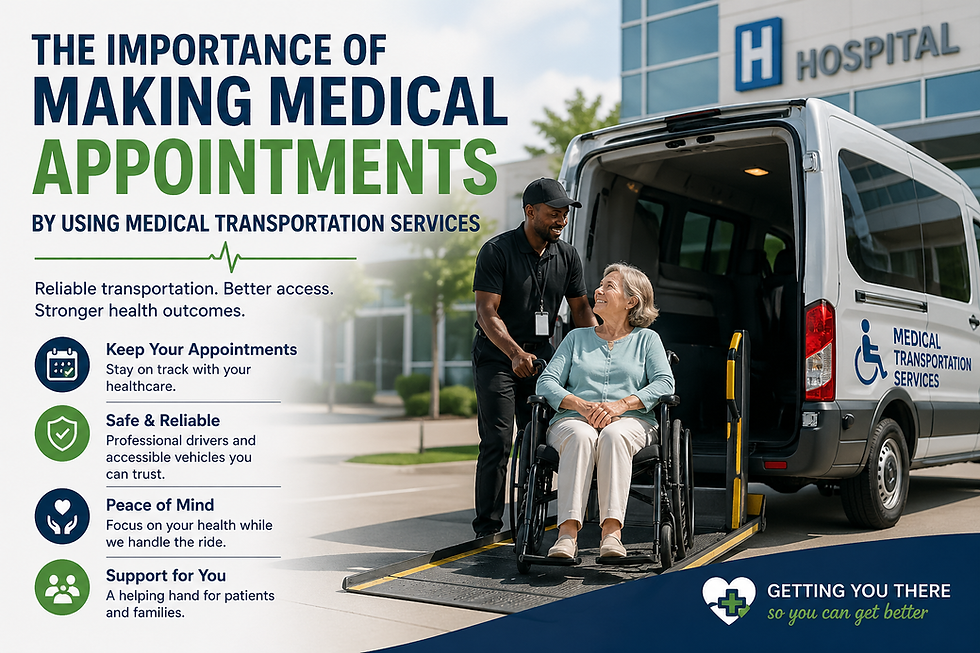
This is the piece families most often overlook when setting up a care plan — and it's the piece that falls apart most visibly. Hospice is designed to be delivered in the home, but patients still need transport: to outpatient palliative appointments, to specialist consultations, to imaging or lab draws that the hospice team requires, and sometimes to inpatient hospice or respite care facilities.
For patients in Sun City Center and Apollo Beach who use a wheelchair, can't sit upright after a procedure, or are simply too weak to safely transfer in and out of a personal vehicle, standard rideshare isn't an option. I've seen families try it — the driver arrives, sees the situation, and cancels. The patient misses the appointment. It sets back the care plan and adds stress to an already exhausted family.
Professional non-emergency medical transportation (NEMT) solves this. Here's how we handle end-of-life transport specifically:
Hospice facility transport
Moving a patient from home to an inpatient hospice unit or respite care facility — and back. We coordinate with the receiving facility on arrival timing and patient condition.
Wheelchair + stretcher available
Palliative care appointments
Outpatient palliative and pain management visits for patients still seeking symptom relief outside of hospice. Recurring scheduling available.
Same-day booking
Specialist consultations
Oncology, neurology, cardiology — patients nearing end of life often still need specialist input. We handle the transport so the family can focus on the visit.
All Tampa Bay facilities
Skilled nursing facility transfers
Transitioning a patient to a SNF or long-term care facility when in-home care is no longer sufficient. We manage the transfer with dignity and care.
Stretcher-equipped vans
What's the difference between home health care and hospice — and can a patient receive both?
This is one of the most common points of confusion for families, and it's worth being clear about.
Factor | Home health care | Hospice care |
Goal | Recovery, rehabilitation, or management of a chronic condition | Comfort, dignity, and quality of life — not cure |
Eligibility | Homebound status + physician order; any prognosis | Terminal prognosis of 6 months or less; election of benefit |
Medicare coverage | Covered under Medicare Part A/B with physician certification of homebound status | Covered under Medicare Hospice Benefit; curative treatment for terminal diagnosis typically ends |
CHHA services | Available as part of the home health plan of care | Included in the hospice benefit — no separate cost |
Can they overlap? | Generally no for the same diagnosis — but a hospice patient can receive home health for a condition unrelated to the terminal diagnosis (e.g., wound care for a separate issue) | |
The practical implication: if your loved one is on hospice, the CHHA services they need are already built into the benefit. You don't pay separately for the aide — she's part of the hospice team. What families often need to arrange separately is the transportation to get the patient to appointments the hospice benefit doesn't cover directly.
How do you actually set up home health or hospice care in Sun City Center or Apollo Beach?
1
Talk to the physician — Your loved one's primary care physician or specialist initiates the process. They write the order for home health or certify the hospice prognosis. If a hospitalization is involved, the hospital social worker is your fastest path to referral.
2
Choose a certified agency — Florida requires home health agencies and hospices to be licensed by the Agency for Health Care Administration (AHCA). Ask any prospective agency for their license number and check it. Medicare-certified hospices are also searchable at Medicare Care Compare.
3
Complete the intake assessment — A registered nurse from the agency conducts an in-home assessment to develop the plan of care. For hospice, this also includes meeting the social worker and chaplain. Plan for this to take 1–2 hours.
4
Arrange supplemental support — Hospice visits are not 24/7. Most agencies provide aide visits 3–5 days per week and nursing check-ins. Families typically fill gaps with their own presence or private-hire caregivers. This is also when transportation coordination matters most.
5
Build the full care team — Confirm who handles what: which agency covers nursing, which covers CHHA, who handles pharmacy, and who handles transport. Write it down. Having this map prevents the handoff failures that cause unnecessary distress in the final weeks.
Veterans in Sun City Center and Apollo Beach: The VA provides hospice and palliative care benefits for eligible veterans that may supplement or replace Medicare hospice. The James A. Haley VA Medical Center in Tampa has a dedicated palliative care team. Ask the VA social worker about eligibility — many families don't realize these benefits exist until it's too late to use them.
What questions should families ask a hospice agency before enrolling?
Not all hospice agencies operate the same way — and in a field where your loved one's final weeks are at stake, the details matter. Here are the questions I recommend families ask before signing any enrollment paperwork:
What is your average response time for after-hours calls? Who answers — a nurse or a call center?
How many patients does each nurse case manager typically carry? (Under 15 is good; over 20 warrants scrutiny.)
How often will the CHHA visit, and for how many hours per visit?
What happens if we need continuous care during a crisis — can you provide 24-hour aide coverage?
What is your inpatient hospice capacity if home care is no longer manageable? Where is your affiliated facility?
What bereavement services do you provide for the family after the patient's death?
Are you Medicare-certified and licensed by AHCA? (This should be non-negotiable.)
A hospice agency that deflects, minimizes, or gives vague answers to any of these is showing you something important. The best ones answer directly and invite the scrutiny — because they've built their programs to withstand it.
A family's experience coordinating end-of-life care in South Hillsborough County
"My father had COPD and was enrolled in hospice through Suncoast in Sun City Center. The nursing visits were wonderful, but the gaps between visits — especially on days when he had a palliative appointment in Tampa — were hard on all of us. We started using Wheelchair & Stretcher Transportation Services for his rides to the pulmonology clinic, and honestly it changed everything. The driver helped him from his recliner to the van, the ride was calm, and I could focus on being his daughter instead of trying to lift him into my car. We used them for the last four months of his life."
— Patricia H., Sun City Center resident
A note on grief: If you're reading this article while a loved one is actively declining, you may be experiencing anticipatory grief — the mourning that begins before a loss. That's real, it's normal, and it's exhausting. The Family Caregiver Alliance and most hospice agencies offer counseling resources for caregiving family members, not just the patient. Please use them.
Who provides NEMT for hospice and end-of-life patients in Sun City Center and Apollo Beach?
MJ
Marqus Willard Johnson, PMP — Founder & Principal Operator
End-of-life transport requires a different kind of care than a routine medical ride. Patients may be frail, in pain, or anxious. Families are often exhausted and emotionally raw. I built our transport operation around the principle that every transfer — especially the difficult ones — deserves a crew that shows up prepared, communicates clearly, and moves with gentleness and intention.
Our work in the Sun City Center and Apollo Beach corridor was recognized in Voyage Tampa's community spotlight as a trusted local NEMT provider. We've coordinated 1,000+ patient transports across Tampa Bay, including end-of-life transfers, hospice facility admissions, and palliative care rides for patients who couldn't safely use any other vehicle.
Community affiliations and professional standing
Families choosing a transport provider for end-of-life care deserve to know who they're working with. We hold active memberships in two Tampa Bay professional organizations:
Our membership in the Hillsborough Black Chamber of Commerce and verified listing with the Upper Tampa Bay Chamber of Commerce reflect that we operate as a known, accountable business in the communities we serve — not an anonymous dispatch line.
See our service in action
If you've never used professional medical transport for a seriously ill family member, watching how a transfer actually works can be reassuring before the day you need it. This short video walks through our vehicles, boarding process, and the care our team brings to every ride:
What good end-of-life planning actually looks like
Certified home health aide support, hospice care, and reliable medical transportation aren't three separate decisions — they're three legs of the same structure. When one is missing or unreliable, the whole plan strains. Families in Sun City Center and Apollo Beach who build all three into their care plan from the beginning report something consistent: they get to be family again, instead of case managers.
The most important takeaways from this guide: hospice is not giving up — it's a structured benefit with real services attached, most of them covered at no cost. Your CHHA is often the most present member of the care team; choose an agency where aides are supervised, certified, and valued. And transportation — the piece most often left to chance — deserves the same intentionality as every other element of the plan.
You don't have to figure all of this out at once. Start with one conversation: call your loved one's physician, or call us. Both will help you find the next right step. The families who navigate this period with the least regret are the ones who asked for help early — and accepted it when it came.
Related guides
Need compassionate transport for a hospice or end-of-life patient?
We serve Sun City Center, Apollo Beach, and all of South Hillsborough County. One call sets everything up.
Wheelchair and stretcher vans for seriously ill and frail patients
Gentle, trained crews who understand end-of-life care dynamics
Same-day transport available for hospice facility admissions
Medicaid eligibility verified on the call
About the author
Marqus Willard Johnson, PMP is a certified Project Management Professional and healthcare transportation operator who has launched and scaled multiple NEMT businesses to six-figure revenue. He has coordinated 1,000+ patient transports across Tampa Bay, specializing in hospital discharge logistics, private-pay wheelchair and stretcher transportation, and complex medical transport including end-of-life transfers.
He has worked directly with hospice teams, hospital social workers, and case managers across Hillsborough and Manatee Counties on discharge workflows, palliative care coordination, and patient safety protocols.
Medical disclaimer: This article is for informational purposes only and does not constitute medical, legal, or financial advice. Hospice and home health decisions should be made in consultation with your physician and care team. For medical emergencies, call 911. Last updated: 2025. | wheelchair-tampa.com | 813-924-8156


Comments