


Two Person Stretcher Service Tampa | Non-Emergency Transport

If you or a family member needs a stretcher to travel safely, a two-person stretcher service in Tampa isn't something you should leave to chance. You need trained professionals with the right equipment, proper safety protocols, and the compassion to handle a vulnerable moment with care.
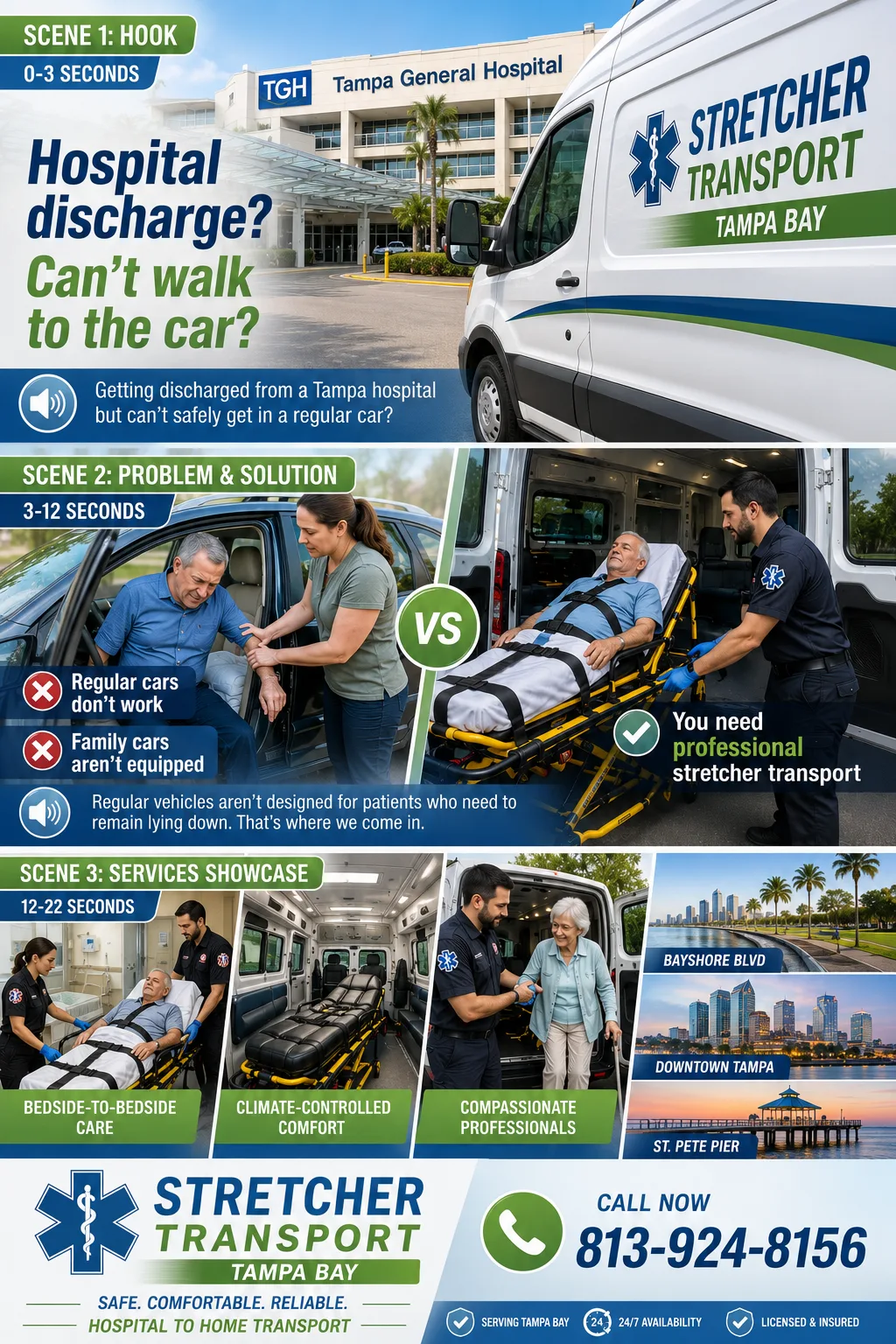
A two-person stretcher transport is built differently than a standard ride. It involves a trained two-person crew, a specially equipped vehicle, and a bedside-to-bedside approach that keeps your loved one safe and comfortable from pickup to arrival. Whether you're heading home after hospitalization, need to get to a dialysis appointment, or require transport between medical facilities, this guide walks you through what to expect and how to find reliable service in the Tampa Bay area.
What Is a Two-Person Stretcher Service?
A two-person stretcher service is a type of non-emergency medical transportation where a trained crew of two people transports patients who cannot safely sit upright or walk on their own. This isn't an ambulance with sirens and emergency protocols. It's a private-pay medical transport service designed for people who need specialized equipment and careful handling but are medically stable.
The two-person crew works together to safely transfer your loved one from their bed (or wherever they are) into the vehicle using proper lifting and positioning techniques. Then they transport them to their destination and assist with transfer upon arrival. The whole experience is designed around safety, dignity, and comfort.
When You Need a Two-Person Stretcher Service
You might need stretcher transport in several common situations. Post-surgery patients often can't sit upright for long trips. People recovering from serious illness or injury may be bedbound or need maximum support. Bariatric patients sometimes require extra-wide or specially reinforced stretchers. Patients with severe arthritis, spinal injuries, or neurological conditions that affect mobility are good candidates too.
Dialysis patients heading to treatment, people being discharged from hospitals, and individuals transitioning to or from nursing facilities also benefit from stretcher service. If your doctor or discharge planner recommended stretcher transport, or if you're unsure whether your loved one is stable enough to sit in a wheelchair, stretcher service is the safer choice.
How Two-Person Stretcher Transport Works
The process is straightforward and built for reliability. You call to schedule your transport and confirm your pickup time and location. On the day of your ride, the two-person crew arrives at your home, hospital room, or facility at the scheduled time.
The crew performs a safe transfer using proper body mechanics and equipment. They position your loved one on the stretcher, secure them with safety straps, and load the stretcher into the vehicle. During the ride, the crew drives safely to your destination. Upon arrival, they unload the stretcher, assist with transfer to the destination (a bed, wheelchair, chair, or wherever the patient needs to be), and complete the transport.
The entire service emphasizes your loved one's safety and comfort. The crew is trained in patient handling, and the vehicle is equipped to accommodate stretcher transport safely. Wheelchair Tampa handles two-person stretcher transports as bedside-to-bedside service, meaning the crew assists at both the starting point and the destination.
Why You Can't Use Regular Rideshare for Stretcher Needs
You might be tempted to call a rideshare app or taxi service to save money. That's understandable, but it's not safe. Regular rideshare drivers aren't trained in patient handling, their vehicles don't have stretcher equipment or securement systems, and there's no liability coverage for medical transport. If your loved one falls during transfer or is injured during the ride, you have no recourse.
A professional two-person stretcher service carries proper insurance, uses secure equipment, and employs crews trained in safe patient handling. The crew knows how to position someone with spinal precautions, how to transfer a bariatric patient, and what to do if something goes wrong during transport. That training and professionalism matter when your loved one's safety is on the line.
What to Expect from Your Stretcher Service Provider
A reliable two-person stretcher service should meet several standards. The crew should be CPR-certified and trained in patient handling and transfer techniques. The vehicles should be fully licensed medical transport vehicles with proper equipment, including stretchers, securement systems, and safety supplies.
The service should offer flexible scheduling and be able to accommodate medical appointments, hospital discharges, facility transfers, and routine medical rides. Staff should communicate clearly about timing, answer your questions about your loved one's specific needs, and approach every transport with professionalism and compassion.
If you're looking for stretcher transport in Tampa Bay that checks all these boxes, it's worth taking time to find a provider you trust. Your loved one deserves safe, dignified care during medical transport.
Booking Your Stretcher Service in Tampa Bay
When you're ready to schedule a two-person stretcher service, you'll call to confirm availability and discuss your loved one's specific needs. The provider will ask about the pickup location, destination, and any special medical considerations (recent surgery, mobility restrictions, weight, medical equipment that needs to travel with them, etc.).
Be honest about your loved one's condition. If they're confused, non-verbal, combative, or have behavioral concerns, tell the provider. If they use oxygen, a feeding tube, catheter, or other medical equipment, mention it. This information helps the crew prepare and ensures they bring the right equipment and have the right mindset for the transport.
Most providers operate during consistent hours and serve specific geographic areas. Wheelchair Tampa serves Hillsborough, Polk, Manatee, Highlands, and Hardee Counties and operates daily service. If you're outside their service area, ask for a referral to a trusted provider nearby.
Need wheelchair transportation?
Private-Pay Stretcher Transport: What You Should Know
Two-person stretcher services are private-pay only. This means you pay out of pocket; these services don't bill Medicaid, Medicare, or insurance companies. Before you book, understand what you'll pay and how payment works (cash, credit card, check, billing after service, etc.).
Ask about your provider's cancellation policy, whether discounts apply for regular, recurring appointments (like dialysis or therapy), and whether they can bill your medical facility or home health agency if you're a patient receiving concurrent care. Some facilities or agencies have relationships with transport providers and can facilitate payment.
Since stretcher transport is private-pay, it's reasonable to call a few providers, confirm they serve your area, ask for a quote, and compare options. Each provider may have slightly different pricing based on distance, time of day, and whether the transport includes special equipment or positioning needs.
Special Considerations for Stretcher Transport
Some patients need extra attention during transport. Bariatric patients may require reinforced stretchers or extra crew members. People with dementia or anxiety might benefit from a familiar caregiver riding along (confirm this is allowed). Post-operative patients might need help managing pain medications or drains.
If your loved one has a condition that affects communication, breathing, mobility, or mental status, let the transport provider know in advance. They can brief the crew, bring additional equipment if needed, and plan the safest approach. Never surprise the crew with a patient who has needs they weren't expecting.
Also confirm whether your loved one can have a family member or personal caregiver ride along, what to do about personal belongings or medical equipment, and whether the provider can accommodate special requests (playing music, taking a specific route, timing the pickup to avoid rush hour, etc.).
Questions to Ask Before Booking
Before you commit, ask your potential provider these questions: Are the crew members CPR-certified and trained in patient handling? Is the vehicle fully licensed for medical transport? Can they accommodate your loved one's specific medical needs and equipment? What are your service hours and coverage area? What's your cancellation policy? How do you handle payment? Can you provide references or information about your company's experience?
A good provider will answer these clearly and without defensiveness. If someone seems evasive, won't answer questions, or acts like your concerns don't matter, choose someone else. You're making a decision about your loved one's safety and comfort, and you deserve transparent, helpful communication.
When Stretcher Service Isn't Enough
In rare cases, a patient is so medically fragile that they need emergency ambulance service instead. If your loved one is having chest pain, difficulty breathing, sudden change in consciousness, uncontrolled bleeding, or other signs of acute medical emergency, call 911. Non-emergency stretcher transport isn't appropriate for someone in active crisis.
If you're unsure whether your loved one needs emergency or non-emergency transport, call their doctor or a hospital and ask. Better to err on the side of caution than to put someone at risk by choosing the wrong service level.
Can I ride along during stretcher transport?
Most providers allow a family member or caregiver to ride in the transport vehicle, though you should confirm this when you book. Having a familiar face nearby can be comforting for your loved one, especially if they're anxious or confused. The crew can usually advise on whether riding along is appropriate for your loved one's condition.
What if my loved one needs medication during transport?
If your loved one takes medications or uses medical equipment during the ride (oxygen, feeding tubes, inhalers, etc.), tell the provider when you book. The crew is trained to assist with equipment that's already being used, but they typically don't administer new medications. If pain medication or other treatment is time-sensitive, coordinate the timing with your transport appointment so medication is given just before or just after the ride.
How far in advance do I need to book a stretcher service?
For routine appointments like dialysis or therapy, providers often prefer to schedule a few days ahead. For hospital discharges and facility transfers, you might call just a day or two before. Emergency same-day requests may or may not be available depending on the provider's schedule. When you need stretcher service, call as soon as you know so the provider can confirm availability and lock in your time slot.
What happens if my loved one is uncomfortable during the ride?
The crew is trained to make adjustments for comfort and safety. If your loved one has pain, difficulty breathing, nausea, or other symptoms during transport, tell the crew immediately. They can adjust positioning, slow down, or in rare cases pull over if someone is in distress. If symptoms suggest a medical emergency, the crew will call 911 and stay with your loved one until emergency responders arrive. That's why it's crucial to book with a trained, professional service instead of an untrained rideshare driver.
Need wheelchair transportation?



Comments