


The Complete Guide to Safe Wheelchair Transport in Florida: Rates, Booking, and Local Expertise
- Marqus Johnson

- Mar 19
- 8 min read

When a loved one depends on a stretcher or wheelchair to get to a dialysis session, a specialist appointment, or home after surgery, the transportation provider you choose is not a logistical detail — it is a medical decision. In North Tampa, one facility that illustrates exactly why this matters is The Bristol at Tampa Rehabilitation & Nursing Center at 1818 E. Fletcher Ave. The facility serves an average of 223 residents at any given time, and many of them need to travel outside its walls regularly — for dialysis, follow-up care, specialist visits, and home discharges. For those residents, and for families across Florida navigating similar transitions, this guide is designed to answer every practical question about non-emergency medical transportation (NEMT).
If you need a ride today, here is what matters: call 813-924-8156 or visit wheelchair-tampa.com to book professional wheelchair or stretcher transport serving Tampa and the surrounding region.
The Quick Takeaway for Immediate Transportation Needs
Not everyone arrives at this guide with time to read every section. If you are managing a hospital discharge, coordinating dialysis transport, or need a same-day ride for a family member with limited mobility, here is the short version:
Service focus: Professional, reliable medical transport for wheelchair and stretcher clients throughout Tampa Bay and greater Florida.
Safety standard: Always request "Door-Through-Door" service — defined below — not just curbside.
Booking: Call 813-924-8156 for same-day or pre-scheduled service. For stretcher transport, booking 24–48 hours in advance is strongly recommended.
For those who want the full picture — including how to evaluate providers, understand your insurance rights, and navigate Florida's NEMT landscape — read on.
The NEMT Difference: Safety, Training, and Trust
Non-emergency medical transportation is a licensed, regulated service category distinct from rideshare platforms and standard taxi services. In Florida, NEMT providers must meet specific insurance, vehicle inspection, and driver credentialing requirements. But regulation sets a floor, not a ceiling. The quality gap between a compliant NEMT operator and a genuinely excellent one can be significant — and for a patient who must remain lying flat during transit, or who has a complex power wheelchair, that gap is measured in safety outcomes.
The team behind Wheelchair & Stretcher Transportation Services in Tampa has built a practice around closing that gap. Led by Marqus Johnson — profiled by Voyage Tampa and recognized as a member of the Hillsborough Black Chamber of Commerce — the service is rooted in a simple philosophy: every patient deserves to be transported as if they are family.
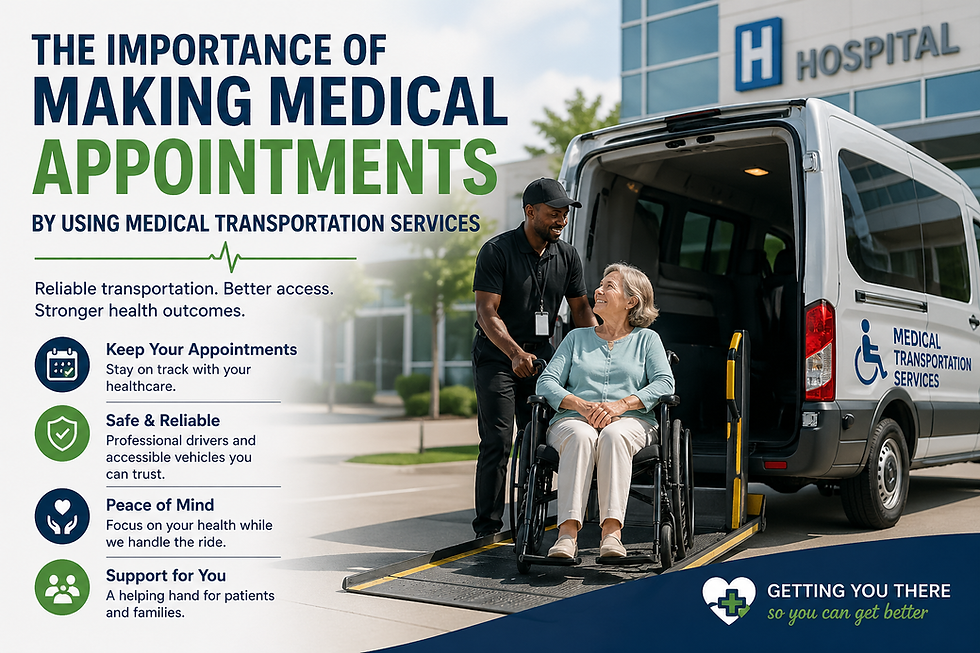
What that looks like in practice includes: CPR-certified and background-checked drivers, ADA-compliant vehicles with commercial-grade hydraulic lifts, 4-point Q'Straint securement systems, and staff trained in patient transfer assistance and sensory awareness protocols. These are not marketing phrases — they are the operational minimums that separate a medical transport professional from someone with a van and a GPS.
Why Door-Through-Door Service Is the Florida Standard
One of the most important distinctions families need to understand when booking wheelchair transport is the difference between curbside and Door-Through-Door service. The terminology is not standardized across all providers, which means a family can book what they believe is full-assistance transport and be surprised when the driver waits at the curb.
Curbside Service
The driver assists the patient at the vehicle curb only. The patient — or a family member — is responsible for moving between the front door of the pickup location and the front door of the destination independently or with minimal support. For ambulatory patients with mild mobility limitations, this may be adequate. For a post-surgical patient or a senior with balance deficits, it is a fall risk.
Door-Through-Door Service (The Professional Standard)
The driver enters the pickup location — whether a hospital room, a nursing facility like The Bristol at Tampa, or a private home — and accompanies the patient all the way to the check-in desk or bedroom at the destination. This is the standard we provide, and it is the only appropriate standard for medically complex or high-fall-risk patients.
For residents leaving skilled nursing facilities in North Tampa, Door-Through-Door service is not a premium upgrade. It is the baseline expectation. The transition from vehicle to building — navigating uneven surfaces, automatic doors, and crowded waiting areas — is precisely when unassisted patients are most vulnerable to falls.
ADA Compliance and Securement Protocols: What to Verify
Not all wheelchair-accessible vehicles are created equal. Florida law requires NEMT vehicles to meet ADA standards, but families should know exactly what to ask for when vetting any provider:
Ramps vs. hydraulic lifts: Manual ramps work for some users, but commercial-grade hydraulic lifts accommodate heavier power wheelchairs and provide a smoother, safer entry. Confirm your provider uses hydraulic lifts.
4-point tie-down securement: Q'Straint and similar systems anchor the wheelchair directly to the vehicle's floorboard at four points, preventing movement during transit or sudden stops. Ask specifically whether 4-point securement is standard practice.
Lap and shoulder belt: Wheelchair securement and passenger restraint are separate systems. Both should be used on every trip.
Vehicle maintenance records: A reputable NEMT provider maintains documented inspection records. Ask when the vehicle was last inspected.
Specialized Services for Every Medical Need
Wheelchair vs. Stretcher Transport: Knowing the Difference
The choice between wheelchair and stretcher transport is a clinical one, not a preference. Here is how to think through it:
Wheelchair Transportation
Appropriate for patients who can sit securely — in a manual or power wheelchair — for the full duration of the trip. This covers the majority of routine medical appointments and is the standard mode for recurring treatments like dialysis or chemotherapy infusions. The patient does not need to transfer out of their own mobility device; the chair is secured to the vehicle floor with them seated in it.
Stretcher / Gurney Transportation
Required for non-ambulatory patients who cannot safely maintain an upright seated position. Common cases include patients recovering from spinal surgery, abdominal procedures, or severe trauma; those with clinical orders to remain supine; and patients transitioning from hospital to a skilled nursing facility requiring bed-to-bed transfer. Stretcher transport typically requires a two-person crew and costs more than wheelchair transport due to the additional equipment and staffing involved.
For an in-depth look at how this distinction applies to hospital discharges in Florida, see our guide on stretcher transportation for hospital discharge, which walks through the clinical criteria, logistics, and timing considerations step by step.
Seamless Hospital Discharge and Facility Transfers
Hospital discharge is one of the highest-stress moments in a patient's care journey — and one of the most logistically demanding for families. Discharge planners at facilities like Tampa General Hospital, St. Joseph's Hospital, and Moffitt Cancer Center manage dozens of concurrent patient transitions every day. Transportation delays are one of the most controllable bottlenecks in that workflow, and a reliable NEMT partner reduces that friction significantly.
Our discharge coordination process means contacting the nursing or case management team directly, confirming the discharge window (not a single time — hospitals rarely discharge exactly on schedule), and dispatching when the patient is confirmed ready. We enter the hospital room, assist with the transfer to the stretcher or wheelchair, and deliver the patient bed-to-bed at their destination.
For dialysis patients at The Bristol at Tampa, six dialysis centers sit within 6.5 miles of the facility, including USF Dialysis Center (2.31 miles), Temple Terrace Dialysis (2.88 miles), and Renal Care Group North Tampa (4.07 miles). Three-times-weekly transport for dialysis is the most recurring NEMT need in skilled nursing populations, and we support standing schedules so families are not rebooking every 48 hours.
Local Expertise: Serving Tampa Bay and Regional Florida
Transportation to Major Tampa Medical Hubs
Knowing the preferred entrances, parking logistics, and discharge workflow at Tampa's major hospitals is not a small operational detail — it is the difference between an on-time pickup and a 45-minute delay that costs the hospital a bed and the patient a stressful afternoon. Our drivers are trained on the specific logistics of:
Tampa General Hospital (TGH) — discharge bay coordination and bed-to-bed protocols
St. Joseph's Hospital — ambulatory and stretcher-level patient pickups
Moffitt Cancer Center — recurring transport for outpatient oncology patients
USF Health and regional specialist offices throughout Hillsborough County
Tampa Bay and Regional Coverage
Local service areas include Tampa, Brandon, Temple Terrace, Wesley Chapel, Riverview, Sun City Center, and Plant City. For regional and long-distance transport, we manage trips to and from Sarasota, The Villages, Naples, Ocala, Fort Lauderdale, Jacksonville, and Miami.
Watch our service overview and see how we operate: View our YouTube community post.
Logistics Simplified: Booking, Costs, and Insurance Clarity
Scheduling Your Safe Ride
Here is the practical booking framework that eliminates delays and avoids last-minute scrambling:
Schedule in advance: 24–48 hours for routine wheelchair rides; 48–72 hours for stretcher transport or bariatric cases, which require specific vehicles and two-person crews.
Gather your trip details: Appointment time, full pickup address (including building, floor, and room number for hospital pickups), destination address, and mobility equipment details (manual chair, power chair, stretcher, oxygen use).
For recurring care: Set up a standing schedule. Dialysis patients and oncology patients benefit from a pre-confirmed weekly rotation rather than rescheduling every trip individually.
Same-day rides: Available based on capacity. Call 813-924-8156 directly — do not rely solely on online booking for urgent or same-day requests.
Understanding NEMT Costs and Insurance Coverage
Cost transparency is a meaningful service differentiator in the NEMT industry. Here is an honest breakdown:
Private pay rates: Most local wheelchair transports around Tampa run approximately $75–$150 one-way for standard routes (2025 pricing). Stretcher transport carries a higher rate due to additional equipment and two-person staffing requirements. Long-distance trips are priced on mileage.
Original Medicare (Parts A and B): Typically does not cover routine non-emergency transportation. Medicare may cover ambulance transport if a physician certifies medical necessity and no other safe option exists.
Florida Medicaid and Medicare Advantage (Part C): May provide full NEMT coverage when the trip meets medical necessity criteria. Coverage rules vary significantly by plan. Always verify with your insurer before your first trip.
We provide receipts suitable for insurance reimbursement or tax documentation on every trip.
Frequently Asked Questions
How do I book wheelchair transportation in Tampa for a medical appointment?
Call us directly at 813-924-8156, or book online at wheelchair-tampa.com. Have your trip details ready: pickup address, destination, appointment time, and mobility equipment needs. Routine rides should be booked 24–48 hours in advance; stretcher transport requires more lead time.
How much does wheelchair transportation cost in Florida?
Costs vary by distance, service level (wheelchair vs. stretcher), and the degree of assistance needed. Most Tampa-area one-way wheelchair trips are in the $75–$150 range for local routes. Contact us with your specific trip details for an upfront quote.
Do you provide hospital discharge transportation?
Yes. We coordinate directly with discharge teams at Tampa General Hospital, St. Joseph's Hospital, and Moffitt Cancer Center, as well as at skilled nursing facilities like The Bristol at Tampa. We enter the room, assist with the transfer, and deliver the patient safely to their next destination — bed to bed.
Which areas of Florida do you serve?
Our primary service area covers Tampa Bay — Tampa, Brandon, Temple Terrace, Riverview, Wesley Chapel, Sun City Center, and Plant City. We also handle regional and long-distance transport to Sarasota, The Villages, Jacksonville, Naples, Fort Lauderdale, and Miami.
Ready to Book? Contact Us Today.
Whether you're coordinating a one-time hospital discharge or setting up recurring dialysis transport for a loved one at a facility like The Bristol at Tampa, the right NEMT partner makes every trip safer and every transition less stressful. Call 813-924-8156 or visit wheelchair-tampa.com to book professional wheelchair and stretcher transportation across Tampa Bay and Florida.
Published by Marqus Johnson | Wheelchair & Stretcher Transportation Services | Tampa, FL


Comments