


Tampa Bay Wheelchair Discharge Transportation: Local NEMT Guide for Hospitals, ALFs, and SNFs

Updated: Aug 27
By Marqus Willard Johnson, PMP | Wheelchair & Stretcher Transportation Services | Last Updated: May 2026*
Overview:
This article covers non-emergency medical transportation (NEMT) logistics only and is not medical advice. For medical emergencies, call 911. Florida Medicaid NEMT eligibility is governed by AHCA’s Non-Emergency Transportation Services policy.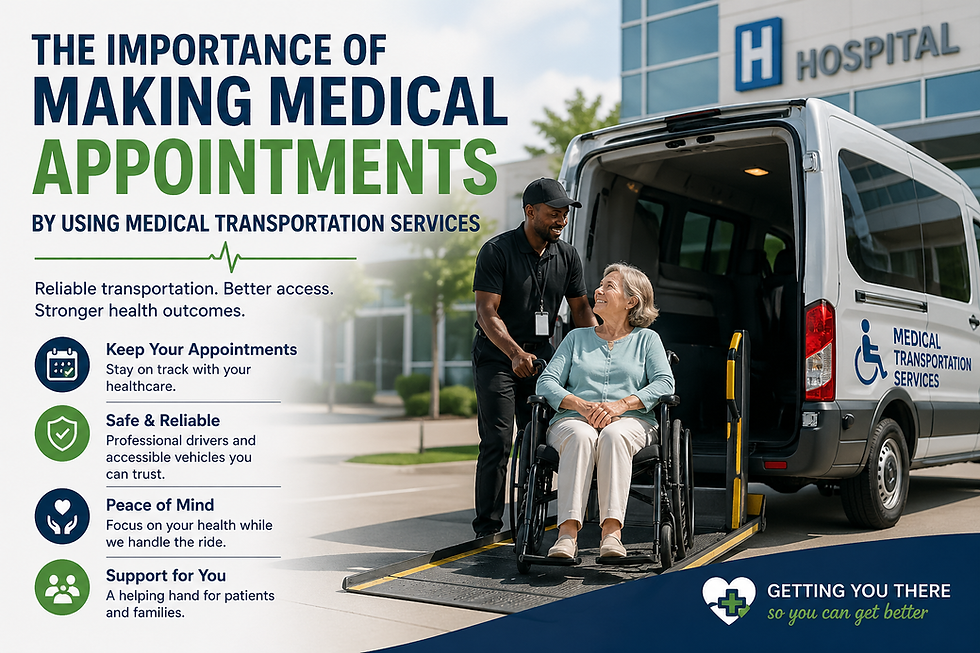
After coordinating 1,000+ wheelchair and stretcher transports across Tampa Bay, the pattern I see most often is this: the discharge fails not because no vehicle exists — it fails because the wrong vehicle is requested, or the booking happens 20 minutes too late. Both outcomes are preventable.
This guide is built for discharge planners, case managers, and families navigating hospital discharges in Tampa Bay. You’ll find every wheelchair NEMT option available locally, 2026 private-pay rates by named route, a step-by-step discharge coordination protocol, and a 6-step recovery plan for when Florida Medicaid denies authorization on discharge day.
Start with the Quick Answer. Then jump to the section that matches where you are in the process.
Quick Answer
Non-emergency medical transportation (NEMT)** for wheelchair-bound discharges in Tampa Bay runs on three tracks: Florida Medicaid NEMT (free for eligible patients, 48–72 hours notice required), Medicare Advantage plans (benefit varies by plan), and private-pay providers like Wheelchair & Stretcher Transportation Services, where wheelchair trips typically cost $75–$150 one-way and stretcher trips $200–$350 on most local routes. Private-pay same-day dispatch is usually available within 2–4 hours.
📞 Need transport today? Call 813-924-8156.
Why Wheelchair Discharge Transport in Tampa Bay Isn’t Just a Medical Taxi
You can’t Lyft a power wheelchair. Tampa Bay families routinely see rideshare drivers arrive, look at the chair, and cancel — refusal rates near 40% are not uncommon for wheelchair and stretcher cases.
Non-emergency medical transportation (NEMT) is a federally defined service category, not a marketing label. Vehicles used for wheelchair discharges are purpose-built: lift- or ramp-equipped wheelchair accessible vehicles (WAVs), ADA four-point securement systems rated for manual and power chairs, and additional anchor points for oxygen and IV equipment. Regulation sets a floor, not a ceiling. The providers worth trusting operate well above it.
Operationally, a WAV dispatch for a hospital discharge is a coordinated handoff, not a curbside ride. The driver goes into the facility, checks in with the charge nurse, assists the patient from bedside through discharge staging, and into the vehicle. That’s Door-Through-Door service — very different from a driver who texts “I’m outside” and waits at the curb.
This matters most at hospitals like Tampa General, where three distinct discharge staging areas (West Pavilion, East Pavilion, and the Departure Lounge) can add 20–40 minutes to extraction time if the driver doesn’t know the building. National brokers routing rides from out of state rarely have that level of facility knowledge. Local operators do.
Wheelchair Van, Stretcher, or Ambulatory? How to Match the Patient to the Right NEMT Level
Get this wrong and you often lose the entire same-day window.
- Standard WAV lifts are typically rated around 800 lbs total load (patient plus chair). Bariatric power chairs alone often weigh 250–350 lbs. A heavy chair plus a heavy patient can exceed that limit. If you’re close to that number, you need a bariatric‑capable WAV.
- Chair width drives securement compatibility. Chairs wider than about 30 inches don’t fit standard four‑point tracks. Saying “wheelchair” isn’t enough. Give the make and model if you can.
Stretcher transport is the default for patients who are non‑weight‑bearing, can’t sit upright safely, or are leaving the hospital with significant positional pain — especially post‑surgical cases. When you’re on the fence, ask the charge nurse, not the family. They know the patient’s true tolerance, not just what the patient hopes to do.
Does Florida Medicaid Cover Wheelchair Discharge Transportation in Tampa Bay?
Yes — but Florida Medicaid’s NEMT rules are strict, and missing any one condition sinks the authorization.
- Patient is enrolled in Florida Medicaid
- Patient is not in a managed care plan that has its own NEMT benefit (check the MCO — this is where many requests go sideways)
- Destination is a Medicaid‑covered service location: home, ALF, SNF, physician office, dialysis center, or outpatient therapy
- A Physician Certification Statement (PCS) is signed by the treating provider before the request is submitted
- The request goes in 48–72 hours before the target discharge — not the morning of.
For Tampa Bay, Medicaid NEMT brokerage is handled by MTM Health. Case managers should have MTM’s line in their discharge toolkit along with AHCA’s policy link; calling the wrong place on discharge day costs hours.
When all those conditions are satisfied, the patient pays nothing out of pocket. The part that breaks most often isn’t eligibility — it’s timing. Start verification as soon as discharge is likely, not when it’s officially written.
Medicaid, Medicare Advantage, or Private Pay? Every Payment Option for Tampa Bay Wheelchair Discharges
Payment is more nuanced than “Medicaid or cash.”
Track 1 — Florida Medicaid NEMT (no out‑of‑pocket for eligible patients)
When the criteria above are met and the trip is properly authorized, Medicaid covers the ride. In Tampa Bay, MTM Health handles those trips for many managed Medicaid plans. Expect a 48–72 hour lead time as a hard rule, not a suggestion.
Track 2 — Medicare Advantage and commercial insurance
Traditional Medicare doesn’t pay for non‑emergency wheelchair van or stretcher trips; it only covers ambulance when strict medical necessity criteria are met. Many Medicare Advantage and commercial plans now bolt on a NEMT benefit, but the limits vary wildly: some include a few rides per year, others restrict mileage or destinations. You can’t assume anything here — you have to check the plan.
Track 3 — Private pay (fastest, most flexible)
Private pay bypasses every authorization gate. For a patient who’s medically ready today, that difference is real.
Most providers in Tampa Bay add mileage past a base radius (often $3.50–$5.00 per mile) plus wait‑time if the unit has to sit for a long discharge. When clinically safe, planning weekday mid‑day discharges is usually less expensive than nights and weekends.
One pro move most families never hear: if Medicaid denied the ride purely on notice, an itemized receipt from a private‑pay trip can support a retroactive appeal with some plans. Ask for a detailed receipt every time.
How Discharge Planners at Tampa Bay Hospitals Should Coordinate Wheelchair NEMT — Step by Step :
This is where the process usually fails — and it’s almost always a systems problem, not an individual problem. Looking across 1,000+ discharges, the same five hand‑offs break: mobility assessment, eligibility timing, pickup details, destination readiness, and real‑time communication. Tuning those is where the PMP in me shows up.
Step 1 — Lock in mobility status and chair specs early.
Do this while the patient is still solidly inpatient. Document whether they truly can sit upright, whether they can transfer with assistance, and what chair they use. Note if the current device is a borrowed hospital wheelchair — it’s not going home with them.
Step 2 — Start Medicaid verification the moment discharge is “likely.”
Not “today,” not “we’re signing orders now.” If the team expects discharge Thursday, the clock for MTM should start by Monday. If you wait for the formal order, you’ve already missed the Medicaid window on half your cases.
Step 3 — Give room‑level pickup coordinates instead of just the hospital name.
“Tampa General Hospital” sends a driver to the front. “TGH, West Pavilion, Room 614, Discharge Bay D, charge nurse Maria at ext. 4421” sends them to the right door on the right floor. At scale, that alone recovers hours of staff time.
Step 4 — Confirm destination readiness before you dispatch.
An ALF or SNF being “aware” isn’t the same thing as being ready. Someone has to confirm that intake staff are on shift, the room is actually prepared, and the nurse on the receiving end has the medication list and orders in hand. That call should be tied to the transport booking, not left to chance.
Step 5 — Put the dispatcher and charge nurse in direct contact.
Late discharges are the norm, not the exception, at high‑volume hospitals. If your nurse can’t reach dispatch directly, you’ve built fragility into the system. A five‑minute delay becomes a cancel‑and‑rebook instead of a small adjustment. Discharging to an ALF or SNF in Tampa Bay? Here’s What Changes for Wheelchair Transport
Home discharges are simple: hospital → front door. ALF and SNF discharges are three‑way coordination: hospital, transport, receiving facility.
ALF: Beware the 15‑minute danger zone.
Most ALFs in Tampa Bay hand off shifts around 7 a.m. and 3 p.m. A patient rolling up at 2:45 p.m. lands in the no‑man’s‑land between those shifts — outgoing staff are documenting, incoming staff are absorbing report, and nobody is staged for a complex arrival.
Whenever you can, schedule ALF arrivals between 10 a.m. and 1 p.m. Confirm an actual arrival window, not just “sometime Thursday.” Then have a quick call between your discharge nurse and the ALF’s charge nurse. The difference between “we know they’re coming” and “we’re ready at 11 a.m.” is the difference between a smooth handoff and chaos.
SNF: Check the building, not just the bed.
SNF patients are often bed‑bound or fresh post‑op. That makes stretcher the default mode — but the facility still matters. Two questions to answer before dispatch:
- Is there ground‑floor or lift‑accessible intake where a stretcher can come in?
- Are the hallways from intake to the room wide enough for a 24–28 inch stretcher?
Older buildings in Hillsborough don’t always follow today’s accessibility assumptions. Our crews call every SNF before a trip: “Where do you want us to bring this stretcher in, and will it fit all the way to the room?” That six‑minute call has prevented more bad manual transfers than any single training we’ve run.
Readmission isn’t random here.
When researchers looked at SNF discharges, they found that patients discharged after two days or fewer had up to four times the 30‑day readmission risk of those who stayed longer. Transport doesn’t cause that, but it sits on the critical path: early discharge → no transport set up for follow‑up → missed visit → complication → bounce‑back.
CMS doesn’t treat those bounce‑backs as bad luck. Under the Hospital Readmissions Reduction Program, hospitals with excess readmissions see payment reductions. For a Tampa Bay facility on value‑based contracts, how you move a wheelchair user on discharge day isn’t just logistics — it’s part of your quality and financial performance.
Florida Medicaid Denied the Transport Authorization — Here’s the 6‑Step Recovery Protocol
Denials happen. Often at the worst possible time. What matters is whether you have a playbook or just a shrug.
Here’s the playbook we run with discharge teams when Florida Medicaid or an MCO denies NEMT on discharge day:
1. Capture the denial reference number.
Every denial has one. Screenshots and written notes both work. You’ll need that number for any appeal.
2. Call Wheelchair Tampa at 813‑924‑8156 with the real transport details.
Spell out mode (WAV, stretcher, bariatric), room number, pavilion, and discharge bay. We confirm a private‑pay 2–4 hour window so the patient can still leave today.
3. Get the physician appeal template into the provider’s hands.
We send a pre‑built PCS appeal form tuned to the kind of language MCOs look for. It takes a physician less than five minutes to complete because it’s structured around their documentation style, not ours.
4. Move the patient.
At this point, you’re not waiting on a phone tree or holding a bed because a fax hasn’t cleared. Transport happens. The patient is safely at home, an ALF, or an SNF instead of burning hours in a discharge bay.
5. Ask for an itemized receipt at drop‑off.
You want date, time, origin, destination, mileage, mode, crew size, and total paid all documented. That becomes exhibit A for any reimbursement attempt.
6. Submit the reimbursement appeal within 72 hours.
Attach the denial number, the completed PCS appeal, and the itemized receipt. Many plans allow retroactive approval when the only failure was notice and the documentation is tight.
You can’t fix a denial that comes from true ineligibility. You can often fix one that comes from timing.
How Reliable Wheelchair Discharge Transport Reduces Tampa Bay Hospital Readmissions
Transportation shows up in the literature more often than most people realize. One review of missed appointments and access issues found millions of visits lost each year because patients simply couldn’t get there. For someone just out of the hospital, missing that first follow‑up is not a minor slip — it’s a risk event.
At the same time, CMS is very explicit: under the Hospital Readmissions Reduction Program, hospitals with excess readmissions for heart failure, COPD, pneumonia, and a handful of other conditions see a cut to their Medicare payments. Florida shows the same pattern in state‑level facilities with weaker post‑acute coordination see higher bounce‑back rates.
You can’t control every factor in a patient’s life. You *can* control whether a wheelchair user has a safe, timely, documented way to get from bed to next setting and to that first follow‑up. When you treat transport as part of the care plan instead of an afterthought, readmission risk goes down. And your HRRP exposure goes down with it.
7 Things to Verify Before Adding a Tampa Bay NEMT Provider to Your Discharge Resource List
Local dispatch, not just a local phone number.
You want true local fleet management, not a national broker that happens to own a Tampa area code.
Real facility knowledge.
The provider should be able to talk concretely about TGH, Moffitt, St. Joseph’s, AdventHealth, BayCare, and the VA — and how they handle discharges at each.
Both wheelchair and stretcher in the fleet.
Single‑mode providers force you to juggle vendors when the patient’s condition changes.
Direct dispatcher–nurse communication.
If their process doesn’t include direct contact with your charge nurses on discharge day, they’re not set up for real‑world delays.
Florida Medicaid and private‑pay capability.
You want one partner who can handle authorization‑based rides and same‑day private‑pay backups.
Detailed receipts on request.
If they can’t generate itemized receipts routinely, you’ll struggle with reimbursement attempts.
Independent verification.
Wheelchair & Stretcher Transportation Services is listed with the [Upper Tampa Bay Chamber of Commerce](https://business.utbchamber.com/list/Details/wheelchair-stretcher-transportation-services-in-tampa-florida-reliable-medical-transport-4602236) and is an active member of the [Hillsborough Black Chamber of Commerce](https://hillsboroughblackchamber.starchapter.com/bio.php?n=244) — two separate checks you can use to confirm we’re a stable local operation, not a pop‑up.
See Tampa Bay Wheelchair Discharge Transport in Action
It’s one thing to read how Door‑Through‑Door is supposed to work. It’s another to watch a real discharge from inside the process.
You’ll see how the driver checks in, how we coordinate with nursing, how we position and secure the chair, and what the handoff looks like on the receiving end. If you’re building a vendor list, this is the standard you can measure others against.
Wheelchair Discharge Transport Done Right Is a Clinical Decision — Not a Logistics Afterthought
The discharge order isn’t the finish line. It’s the handoff point. How a wheelchair‑bound patient moves from a Tampa Bay hospital bed to home, an ALF, or an SNF directly shapes whether they stay well or come back through the ED doors within 30 days.
When you match the patient to the right transport level, start eligibility checks early, give real pickup coordinates, confirm that the next setting is ready, and have a denial recovery plan, discharge day gets calmer. The patient leaves on time. The bed turns over. The care plan stays intact.
That doesn’t take a new budget. It takes a new sequence — and a partner who understands the difference between TGH’s West Pavilion and its Departure Lounge from the inside, not from a map.
That partner exists here in Tampa Bay. The next discharge doesn’t have to be the one that goes sideways.
📞 **813‑924‑8156** | 📍 625 E Twiggs St, Tampa FL 33602 | 🌐 wheelchair-tampa.com
Frequently Asked Questions
Does Florida Medicaid cover wheelchair transport from a Tampa Bay hospital?
Yes — for eligible members who have no other ride and when the trip is to a Medicaid‑covered service, with at least 48–72 hours notice. In Tampa Bay, MTM Health manages most Medicaid NEMT trips.[1][6]
How much does wheelchair discharge transportation cost in Tampa Bay?
Most local wheelchair trips run $75–$150 one‑way; stretcher trips run $200–$350, depending on distance and timing. Qualified Medicaid members pay nothing out of pocket with proper authorization.
Can I book same‑day wheelchair transport for a hospital discharge?**
Yes — through private‑pay providers like Wheelchair & Stretcher Transportation Services. We typically confirm a 2–4 hour dispatch window. Medicaid and most insurance plans do not guarantee same‑day approval.
How do I arrange NEMT for a discharge to a skilled nursing facility?
Call at least 24–48 hours before discharge. Give the real room and unit information, confirm stretcher vs. wheelchair, verify the SNF’s entrance and hallway access, and line up medication and equipment hand‑offs to the same arrival window.
What should I do if Medicaid denies authorization on discharge day?**
Document the denial number, book a private‑pay ride, use a tight PCS appeal template, get an itemized receipt, and submit a reimbursement request within the plan’s retroactive window (often around 30 days).
About the Author
Marqus Willard Johnson, PMP is the founder and principal operator of Wheelchair & Stretcher Transportation Services in Tampa, Florida. As a licensed NEMT provider and project management professional, he has coordinated more than 1,000 patient transports across Tampa Bay, working hand‑in‑hand with discharge teams at Tampa General Hospital, Moffitt Cancer Center, BayCare, and other local facilities. His work and local business story are featured in [Voyage Tampa’s community highlights](https://voyagetampa.com/interview/community-highlights-meet-marqus-johnson-of-wheelchair-stretcher-transportation-services-in-tampa-florida-reliable-medical-transport). He is an active member of the [Hillsborough Black Chamber of Commerce](https://hillsboroughblackchamber.starchapter.com/bio.php?n=244) and the [Upper Tampa Bay Chamber of Commerce](https://business.utbchamber.com/list/Details/wheelchair-stretcher-transportation-services-in-tampa-florida-reliable-medical-transport-4602236).[3][10]
If you want to talk through NEMT operations, discharge workflow design, or transport in value‑based care, you can connect with Marqus on LinkedIn.
**Related articles:**
- Same‑Day Non‑Emergency Medical Transportation Booking Guide[2]
- How Much Does Hospital Discharge Wheelchair Transport Cost in Tampa?[4]
- Tampa General Hospital Wheelchair Transportation: Everything You Need to Know[10]
Wheelchair & Stretcher Transportation Services · 625 E Twiggs St, Tampa FL 33602 · 813‑924‑8156 · wheelchair-tampa.com
Sources
[1] Non-Emergency Transportation Services - AHCA - MyFlorida.com https://ahca.myflorida.com/medicaid/medicaid-policy-quality-and-operations/medicaid-policy-and-quality/medicaid-policy/medical-and-behavioral-health-coverage-policy/specialized-health-services/non-emergency-transportation-services
[2] Same Day Non-Emergency Medical Transportation Booking Guide https://www.wheelchair-tampa.com/post/same-day-non-emergency-medical-transportation-booking-guide
[3] NEMT Guide · Tampa Bay, FL · Patient TransportationThe ... https://www.wheelchair-tampa.com/post/importance-of-patient-transportation


I like how the cars react to ramps and obstacles instead of just driving normally. Drive Mad gives a fun mix of control and challenge.