


How to Get Your Loved One Home from the Hospital Without an Ambulance
- Marqus Johnson

- Apr 9
- 7 min read

When the doctor finally signs those discharge papers, the relief is almost physical. Then comes the sharp, practical question: how do you actually get them home safely when a family SUV feels too risky — but a $2,000 ambulance ride feels like overkill?
Navigating discharge from a hospital like Tampa General or St. Joseph's isn't just a logistics problem. It's a moment of real vulnerability for your loved one — and real pressure on you as the person responsible for getting it right. Hip surgery recovery, a prolonged respiratory stay, a cancer treatment follow-up — each situation carries its own set of mobility challenges that neither an Uber nor an emergency vehicle is really built for.
Fortunately, there's a middle path. This guide walks you through the full picture: professional NEMT (Non-Emergency Medical Transportation), how to work with hospital discharge planners, a DIY safety checklist for personal vehicle transfers, and Tampa-specific logistics that no national resource will ever tell you.
First, Know Your Transport Options
Getting a loved one home from the hospital without an ambulance comes down to three realistic paths: a professional NEMT provider, a properly equipped personal vehicle, or — in some very limited cases — a rideshare. The right choice depends almost entirely on the patient's mobility and how much hands-on assistance they need.
Here's the honest breakdown:
Ambulatory transport — For patients who can walk short distances (with a cane or walker) and sit in a standard car seat without restriction.
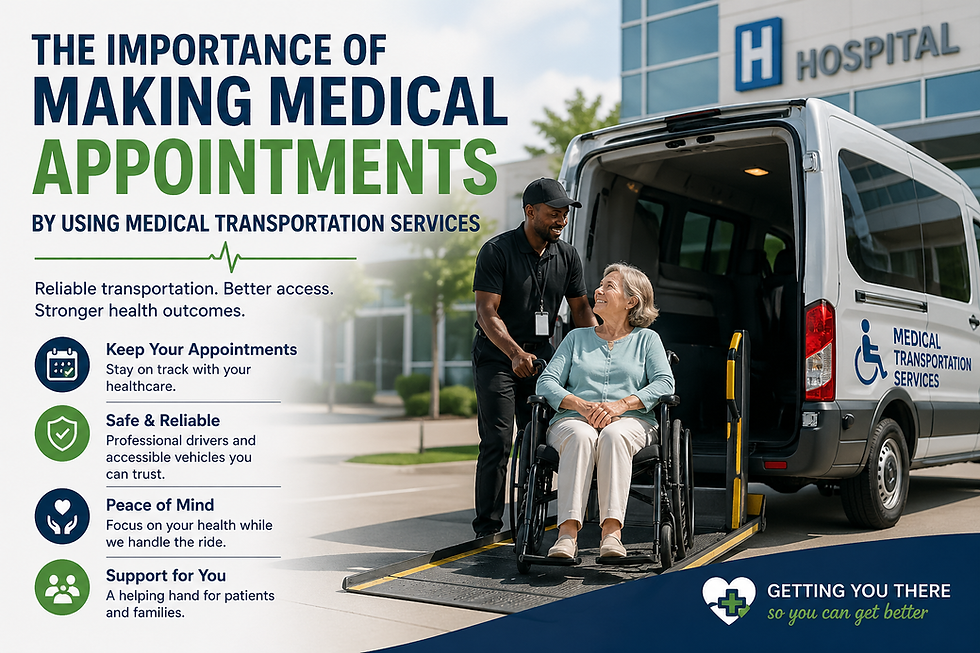
Wheelchair van service — For patients who must remain in their manual or power wheelchair throughout the trip. Hydraulic ramps, tie-downs, and ADA-compliant vehicles are non-negotiable here.
Stretcher transport — For those who simply cannot sit upright: post-spinal surgery, severe weakness, wound care positioning requirements. A gurney service handles all of it.
If the discharge team greenlights a regular car, great — skip to the DIY section below. But if there's any question about whether the patient can safely tolerate an upright seated position, you're looking at professional NEMT. That's not a cost-cutting failure; it's the right call.
Work the System: Coordinating with Hospital Discharge Planners
Here's something most families don't realize: hospital social workers and discharge planners are responsible for clearing the bed. That pressure can nudge them toward recommending an ambulance by default — because it's the fastest path to a documented, covered transfer. You have every right to push back.
Start the conversation 24 hours before the expected discharge date. Don't wait for them to come to you.
THE DOCUMENTS THAT ACTUALLY MATTER
Ask specifically for a Physician Certification Statement (PCS). This form officially documents the patient's mobility limitations and serves two purposes: it authorizes your NEMT provider to handle the transfer, and it's often the key to unlocking insurance reimbursement. Without it, you're navigating reimbursement in the dark.
THE DISCHARGE ADVOCACY SCRIPT
These aren't magic phrases — but they are the kind of confident, specific language that moves things forward:
"We've already arranged for a private NEMT provider — what time will the bedside clearance be complete?""The patient doesn't require life-support monitoring. Can we transition to a professional wheelchair van instead of an ALS ambulance?""We're prioritizing a bed-to-bed handoff — will a nurse be available to assist our driver with the final transfer?"
Taking that kind of lead eliminates the agonizing "waiting game" in the hospital lobby. When you've done the coordination in advance, the driver arrives and your loved one is already dressed, medicated, and ready to roll.
Introducing the Provider Behind This Guide
MJ
Marqus Johnson — Founder, Wheelchair & Stretcher Transportation ServicesThis guide was developed by Marqus Johnson, a Tampa-based NEMT operator with over 15 years of hands-on experience in non-emergency medical transport, healthcare logistics, and patient advocacy. His company has been recognized as a trusted community resource and was featured in Voyage Tampa's community highlights — a testament to the relationships built with patients, families, and care teams across the Tampa Bay area.
NEMT vs. Rideshare vs. Your Own Car: The Real Comparison
It's tempting to reach for the Uber app. And honestly, if the patient is fully ambulatory and the hospital is five minutes from home, that might be fine. But for someone leaving Moffitt Cancer Center or recovering from joint replacement surgery? Most rideshare drivers aren't trained in medical transfers — and they can (and will) refuse a ride if the patient appears unstable or the equipment won't fit.
NEMT exists to fill that gap. Unlike a standard driver, a professional NEMT provider doesn't just wait at the curb. They enter the facility, talk to nursing staff, confirm positioning requirements, and make sure your loved one is safely secured before the vehicle moves an inch.
Feature | Personal Vehicle | Rideshare (Uber/Lyft) | Professional NEMT |
Medical Training | Caregiver only | None | First Aid / Transfer Certified |
Vehicle Equipment | Standard | Standard | ADA Compliant / Hydraulic Ramps |
Assistance Level | High (you) | None (curb-to-curb) | Full (bed-to-bed) |
Cost | Fuel only | $20–$60 | Moderate (private pay or covered) |
Pro Tip: Think about suspension. Standard cars can be brutal on I-4 or I-75 for someone fresh out of surgery. Professional NEMT vans use specialized systems designed to absorb road shock — which matters enormously for pain management. Resources like the Mayo Clinic and Johns Hopkins offer additional guidance on patient positioning and pressure ulcer prevention during transport transitions.
Rooted in Tampa Bay: Community Connections That Matter
Wheelchair & Stretcher Transportation Services isn't just a licensed NEMT provider — it's a locally invested business with real accountability to this community. Marqus Johnson serves as an active member of the Hillsborough Black Chamber of Commerce, which reflects a commitment to economic inclusion and professional development that extends beyond business metrics.
The company is also formally listed with the Upper Tampa Bay Chamber of Commerce — an independent verification of the company's professional standing, service area, and operating legitimacy. For healthcare providers, discharge planners, and case managers: that kind of third-party credentialing matters when you're putting a patient in someone's care.
The DIY Route: Managing a Safe Car Transfer
If the medical team clears you for a personal vehicle transfer, the actual moment of moving the patient from wheelchair to car seat is the highest-risk part of the whole process. This is where caregivers throw out their backs and patients hit the pavement. Don't wing it.
Stop lifting and start guiding. A gait belt — a sturdy strap around the patient's waist — gives you a secure handle on their center of gravity without yanking on shoulders or arms (both of which can cause serious injury during a disoriented post-hospital moment).
THE PIVOT-AND-SIT TECHNIQUE
Prep the car: Park on flat ground, open the door fully, and slide the passenger seat all the way back.
Position the wheelchair: Pull it right up to the car door, lock the brakes, and swing the footrests clear.
Help them stand: Using the gait belt, support their rise slowly. Don't rush this part — let them find their balance.
Execute the pivot: Guide them to turn until they feel the car seat against the back of their legs.
Lower them in: Once seated, help them swing their legs into the vehicle one at a time.
Hip or knee surgery restriction? If the patient has a 90-degree flexion restriction, place a firm pillow on the seat before they sit. Raising the seat height keeps the joint from bending past its post-surgical limit — which protects both the new hardware and your sanity when you're back in the surgeon's office at the six-week follow-up.
Tampa-Specific Challenges Nobody Else Will Tell You
Discharging from a Tampa Bay hospital has its own geography, its own traffic patterns, and its own quirks — and national guides don't cover any of it.
Here's what years of picking up patients at Tampa General, Moffitt, and St. Joseph's actually teaches you:
THE PEAK DISCHARGE WINDOW
Most Tampa-area hospitals discharge patients between 11:00 AM and 2:00 PM. That's exactly when the Howard Frankland Bridge and the Selmon Expressway become parking lots in the Florida heat. Requesting a "pre-peak" pickup — before 10:30 AM when possible — keeps your loved one out of a hot vehicle during the worst of the midday humidity and cuts travel time significantly.
FACILITY NAVIGATION NOTES
TGH on Davis Islands: The East Twiggs St. corridor is frequently the smarter route around downtown construction — especially relevant for patients with pain sensitivity.
Climate control matters: Vehicles are pre-cooled at least 15 minutes before arrival. For seniors returning to Sun City Center, Brandon, or Riverview, keeping the AC at full blast isn't just comfort — it's active dehydration prevention.
The "last mile" problem: The stretch from the hospital room to the pickup curb is often where things fall apart. Good NEMT operators know the specific docking zones, elevator locations, and nursing handoff protocols at each facility. That coordination detail is what separates a smooth discharge from a 45-minute wait in the lobby.
The Insurance Myth That Costs Tampa Families Real Money
There's a persistent belief in Hillsborough County that an ambulance is the only transport option insurance will cover. It's wrong — and believing it can saddle families with a $1,500+ bill they never needed.
Florida Medicaid and many Medicare Advantage plans cover NEMT when the patient's condition makes a standard vehicle unsafe. The operative phrase is "medical necessity." If your loved one can't walk or stand safely, a wheelchair van or stretcher service is typically the approved — and far more affordable — alternative.
Beyond cost, there's a public health dimension worth naming: choosing NEMT over an ambulance keeps those emergency vehicles available for actual 911 calls. That's not a small thing in a metro area the size of Tampa Bay.
See the Service in Action
Sometimes the clearest way to understand what professional NEMT actually looks like is to watch it. The video below shows real vehicles, real equipment, and the kind of care that goes into every transport — from ramp deployment to final handoff.
Seeing the hydraulic ramp in use, the way patients are secured, and how drivers interact with facility staff gives families — and referring providers — real confidence before booking a first transport.
A Homecoming That Feels Like One
Getting your loved one home safely without an ambulance is about one thing: taking back control of a moment that often feels like it's controlling you. The discharge paperwork, the insurance maze, the logistics of moving a post-surgical patient through Tampa traffic — none of it has to be improvised.
Start the discharge conversation early. Ask for the Physician Certification Statement. Know which vehicle type fits the patient's actual needs. And if you're working with a professional service, verify their credentials, their equipment, and their familiarity with the specific facilities involved.
You're the advocate here. The clinical team handled the hard part — now the job is making sure the journey home matches the standard of care that got your loved one this far.


Comments