


Wheelchair Transportation for Hospital Discharge: Complete Guide

Getting home from the hospital is more than just a ride. If you or a loved one uses a wheelchair or has limited mobility, you need specialized transportation that handles medical equipment safely and gets you home with dignity.
This guide walks you through everything you need to know about wheelchair transportation for hospital discharge, from assessing what type of transport you need to booking your ride.
Why Hospital Discharge Transportation Matters
A hospital discharge isn't like a regular trip. You're often tired, in pain, on new medications, or recovering from surgery. Your mobility might be reduced. You may need to transport medical equipment like walkers, oxygen tanks, or other devices.
Standard rideshare apps and taxis aren't built for this. They don't have the equipment, training, or insurance to handle medical transportation safely. You need a provider that understands hospital discharge logistics and specializes in patients with mobility challenges.
That's where professional medical transportation comes in. Wheelchair Tampa and similar specialized services offer door-to-door transport designed specifically for people leaving the hospital.
Assess Your Mobility Level First
Before you book anything, know what type of transport you actually need. Patients fall into three main categories.
Wheelchair-accessible van transport: You use a wheelchair, but you can transfer yourself (or with minimal help) from the wheelchair to a seat. A wheelchair van has a ramp or lift and space to secure your chair. Your driver helps with boarding and securing equipment.
Standard sedan transport: You can walk with assistance (walker, cane, or arm support) but prefer not to stand for long periods or navigate stairs. You travel in a regular accessible vehicle with trained staff.
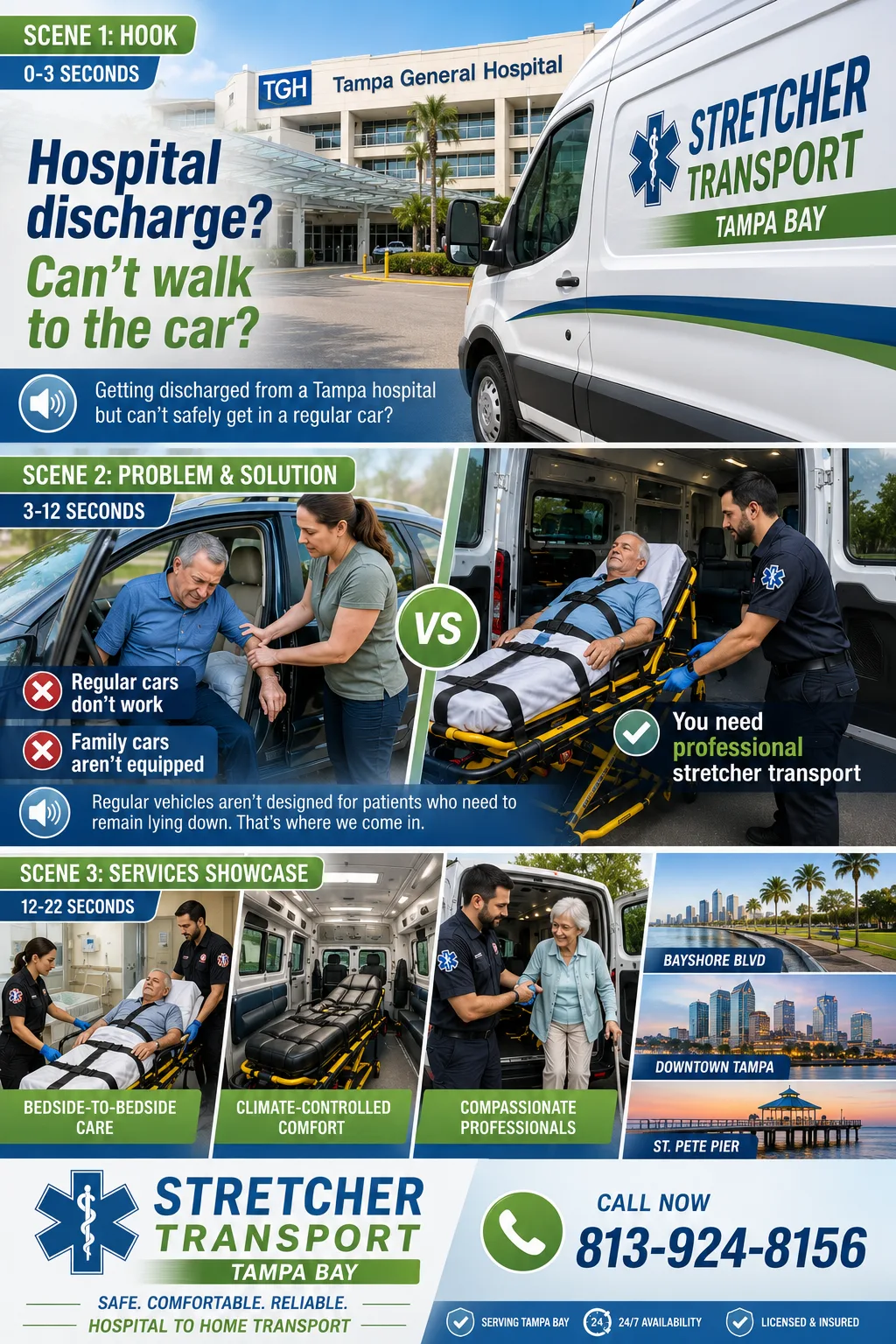
Stretcher transport: You cannot sit up, walk, or transfer. You need bedside-to-bedside transport on a stretcher or gurney. This requires a two-person crew and specialized equipment.
Your hospital discharge planner or social worker can help you figure out which category applies. If you're unsure, call ahead and describe your condition honestly. The transportation provider can recommend the right option.
What to Prepare Before Discharge
Don't wait until discharge day to arrange your ride. Start planning 24 to 48 hours before you leave the hospital.
Get the details straight: Know your discharge time, your destination address, and whether you'll need to make any stops (pharmacy, home health supply pickup, etc.). Your hospital case manager should have this information.
Gather your medical equipment: List everything you're taking home: wheelchair, walker, oxygen tank, cane, medical supplies, or other devices. Let the transportation company know so they can ensure their vehicle has enough space.
Confirm any special needs: Tell the provider if you have pain, need extra time boarding, use a catheter, or have other medical considerations. No judgment, no surprises. Clear communication keeps you safe.
Arrange payment in advance: Medical transportation is private pay. Discuss costs and payment methods when you book. Have your payment method ready so there's no delay on discharge day.
How to Book Your Discharge Transportation
Most hospitals have a discharge planning department that can recommend local medical transportation providers. If you live in Hillsborough, Polk, Manatee, Highlands, or Hardee County in Florida, Wheelchair Tampa serves your area.
Need wheelchair transportation?
When you call to book:
Provide your discharge date, time, and destination.
Describe your mobility level and any medical equipment you're traveling with.
Ask about the vehicle type, driver training, and what happens if you need extra time.
Confirm the price and payment options.
Ask for a confirmation and the driver's contact information.
Book as soon as your discharge date is confirmed. Waiting until the last minute limits availability.
What Happens on Discharge Day
Your driver will arrive at the hospital entrance at the scheduled time. Let your nurse know the driver is coming so you're ready to go.
A trained driver will help you board safely, secure your wheelchair or mobility equipment, and make sure you're comfortable before driving. The entire process takes longer than a regular taxi pickup, but that's normal and necessary.
Tell your driver if you need the ride to go slower, if you're in pain, or if you need to make a stop on the way home. Specialized medical drivers are trained to handle these situations and prioritize your comfort and safety.
Door-to-door service means you travel from the hospital to your home entrance. Your driver may help you into your home or to a family member waiting there, depending on what was arranged.
Special Considerations for Post-Surgery Patients
If you're recovering from surgery, your mobility and pain level are usually at their worst right after discharge. You might feel dizzy, weak, or unstable.
Let the transportation provider know about your surgery type. If you had hip or knee surgery, you may need extra time boarding. If you had abdominal surgery, bumpy roads might hurt. If you had spinal surgery, you might need stretcher transport instead of a regular van.
Your hospital team can share medical notes with the transportation company (with your permission) so they understand your restrictions and handle you appropriately.
Bariatric and High-Weight Considerations
If you're bariatric or have high weight, speak up when booking. Not all medical transportation vehicles are rated for all weights. Professional providers have vehicles and equipment designed for bariatric patients and can tell you upfront if they can safely transport you.
Trying to hide this information creates safety risks and wastes everyone's time. Honest communication ensures you get the right vehicle and a safe ride home.
What if You Need a Stretcher Transport?
Stretcher transports are for patients who cannot sit, stand, or transfer on their own. Wheelchair Tampa provides stretcher transport with a two-person crew, bedside to bedside.
This means one team member helps you from the hospital bed onto the stretcher, and the same level of care applies at your home. Two people handle all the heavy lifting and safety measures, so you're never left alone or unsupported during the move.
Stretcher transport takes longer and costs more than wheelchair transport, but it's the right choice if you physically cannot sit or transfer.
Private Pay Transportation vs. Insurance
Here's something important: Wheelchair Tampa is private pay only. We do not bill, accept, or process Medicaid, Medicare, or insurance claims.
This is actually a benefit for you. You book a ride, pay directly, and leave. No insurance pre-authorizations to wait for, no claim denials to fight. You know your cost upfront and control the entire process.
If you want to explore whether your insurance covers medical transportation, ask your hospital discharge planner. But know that private pay services like wheelchair transportation are often faster and more convenient, especially for urgent discharge situations.
Preparing Your Home for Arrival
Before the transportation team arrives with you, make sure your home is ready.
Clear pathways so your wheelchair or walker can move freely.
Make sure your bed, bathroom, and kitchen are accessible.
Have a family member or home health aide present if possible.
Stock any medical supplies or medications you'll need immediately.
The transportation driver's job ends at your door. If you need help inside the home, arrange for a family member, home health aide, or caregiver to be there waiting.
Common Questions About Hospital Discharge Transportation
Can I bring a family member in the wheelchair van?
It depends on the vehicle setup and company policy. Some vans have extra seats for a caregiver or family member. Ask when you book. If space is tight, one person might need to follow in a separate car or meet you at home.
What if my discharge time changes?
Call the transportation company immediately. Hospitals often discharge earlier or later than planned. The provider needs to know so they can adjust the driver schedule. Waiting until the last minute to notify them may delay your ride.
Do I need to tip the driver?
Tips are always appreciated and optional. If your driver goes above and beyond, a tip is a nice way to show gratitude. Discuss payment and tipping options when you book.
What if I'm not ready to go at the scheduled time?
Tell the driver. Medical transportation drivers are trained to work with post-discharge patients and know that you might need extra time. Don't rush if you're still in pain or not feeling well. The driver will wait within reason.
Need wheelchair transportation?



Comments