


Transportation for Wheelchair Patients: Complete Guide

If you're searching for transportation for wheelchair patients, you need a service that actually understands mobility challenges. This isn't about calling a regular taxi or using a rideshare app. Wheelchair-accessible medical transportation is specialized, equipped, and staffed by people trained to keep you safe and comfortable during the ride.
Let's walk through what makes real wheelchair transportation different, how to find it, and what questions you should ask before booking your first ride.
What Is Specialized Transportation for Wheelchair Patients?
Transportation for wheelchair patients means a vehicle equipped with a wheelchair lift or ramp, a secured tie-down system, and staff trained to assist with boarding and positioning. These aren't regular cars with a lift bolted on as an afterthought.
Proper wheelchair transportation includes:
Wheelchair-lift-equipped vehicles (hydraulic or electric lifts)
Wheelchair securement systems that lock your chair in place during the ride
Staff trained in safe passenger handling and disability awareness
Climate-controlled cabins to keep you comfortable
Regular vehicle maintenance and safety inspections
Insurance coverage for medical transportation
The difference between accessible transportation and what you might find elsewhere is safety. A real wheelchair transport service prioritizes your stability, prevents falls, and gets you to your destination—whether it's a doctor's appointment, dialysis center, or hospital discharge—without risk.
When Do You Need Wheelchair Patient Transportation?
Most people need specialized transportation after a specific life event or due to an ongoing medical condition.
Common reasons include:
Hospital discharge after surgery or extended stay
Dialysis appointments (usually 3 times per week)
Oncology or chemotherapy sessions
Physical therapy or rehabilitation visits
Routine doctor's appointments you can't manage with family
Post-injury mobility recovery
Chronic conditions requiring regular medical care
Bariatric patients who need extra-wide, reinforced vehicles
If you're a family caregiver, you also know that driving a wheelchair patient to medical appointments is exhausting. You're managing their mobility, your own driving, parking challenges, and time away from work or other responsibilities. Medical transportation takes that burden off your shoulders.
How to Find Transportation for Wheelchair Patients in Your Area
Start by identifying what type of service exists near you. There are several options, and not all are equal.
Know your geography first. Medical transportation services are regional. If you live in the Tampa Bay area, including Hillsborough, Polk, Manatee, Highlands, or Hardee Counties, your options differ from someone in a smaller town or rural area. Always confirm service area before you call.
Ask your discharge planner or doctor's office. If you're leaving a hospital or scheduling recurring appointments, the medical facility often has standing relationships with local transportation providers. They'll have pre-vetted options that meet their safety standards.
Call ahead and ask the right questions. When you contact a transportation provider, don't just ask about availability. Ask about vehicle type, driver training, securement procedures, and how they handle emergencies during transport.
For residents in the Tampa Bay region, Wheelchair Tampa provides private-pay wheelchair and stretcher transportation across multiple counties, including specialized rides to medical appointments, hospital discharges, and ongoing treatments.
Need wheelchair transportation?
What to Expect During Your First Wheelchair Transport
Once you've booked transportation for wheelchair patients, here's what typically happens.
Before the ride: You'll confirm pickup time, your destination, and any special needs (ramps vs. lifts, assistance transferring, temperature preferences). Arrive 15 minutes early and have your chair in good working condition—clean wheels, secure footrest, working brakes.
During the ride: The driver will use the wheelchair lift to board you safely, position your chair, and secure it with tie-downs. You'll remain in your wheelchair for the entire transport. The vehicle is climate-controlled, and drivers know patient comfort matters.
At your destination: The driver will unsecure your chair, lower the lift, and assist you with exit if needed. Many services offer bedside assistance for hospital discharges or medical facility pickups.
After: If you need a return trip, that's arranged at pickup or booked separately. Some patients schedule recurring appointments (like weekly dialysis) and book the same time slots each week.
Private-Pay vs. Insurance-Covered Transportation
This is crucial: not all wheelchair transportation is covered by insurance or government programs.
Some transportation providers bill Medicaid, Medicare or insurance, which usually means waiting for authorization and approval. Wheelchair Tampa is private pay only: it does not bill Medicaid, Medicare or insurance, so you pay directly and book on your own schedule.
Other services operate on a private-pay model. You pay out of pocket. Wheelchair Tampa is a private-pay service, meaning there's no insurance processing, no pre-authorization delays, and you're not waiting weeks for coverage approval. You book, you ride, you pay. It's straightforward.
Private-pay services often move faster for urgent needs like hospital discharges or last-minute medical appointments. You don't need approval from a third party.
Understand your own situation: Do you have insurance coverage for NEMT? If yes, ask your provider for a list of approved vendors. If not, or if you want faster, more flexible service, private-pay transportation is worth exploring.
Stretcher Transportation for Bed-Bound Patients
Not everyone can sit upright in a wheelchair. Some patients are bed-bound or semi-recumbent due to surgery, injury, or illness.
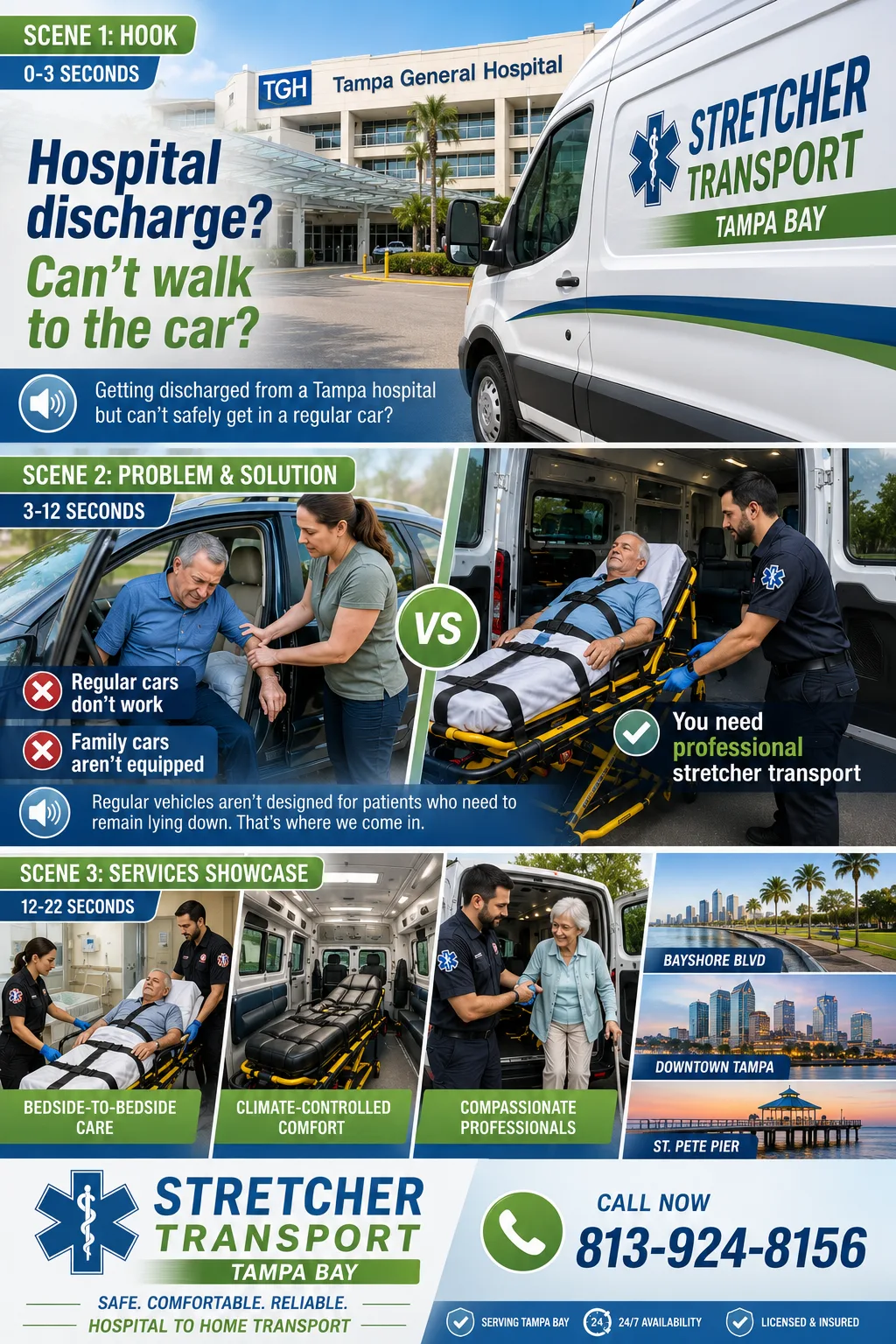
Stretcher transport is purpose-built for this. A stretcher vehicle is equipped with a hydraulic or electric stretcher, medical-grade linens, and safety railings. The crew typically consists of two trained staff members who handle all positioning and securing.
Stretcher transport is bedside to bedside, meaning the crew assists you from your home or hospital bed, transports you safely, and positions you at your destination. It's more involved than wheelchair transport, and it requires proper equipment and training.
If someone you're caring for needs stretcher transport, ask potential providers about their crew training, equipment maintenance, and experience with your specific medical needs.
Questions to Ask Before Booking Wheelchair Transportation
Don't just book the first service you call. Ask these questions:
Are your vehicles wheelchair-lift equipped or ramp-equipped? (Both are valid; understand the difference for your chair type.)
What is your driver training for assisting wheelchair passengers?
Do you offer 24/7 scheduling, or only during business hours?
What is your average response time for same-day bookings?
Do you provide assistance with transfers, or do I stay in my wheelchair the entire ride?
What is your pricing structure? (Base fare, mileage, wait time, etc.)
Do you operate in my county or service area?
What happens if there's a breakdown or delay during transport?
Do you have experience with bariatric patients or other special needs?
A professional transportation provider will answer every one of these clearly. If they dodge questions or seem annoyed, keep looking.
Tips for a Smooth Transportation Experience
Keep your wheelchair maintained. Clean wheels, working brakes, and secure footrests make boarding easier and faster. A poorly maintained chair can delay the ride or create safety issues.
Communicate special needs upfront. If you're recovering from surgery, have mobility pain, or need extra time to board, mention it during booking. The driver can plan accordingly.
Be ready at pickup time. These services run on schedules. Being ready means the driver isn't waiting, and your appointment isn't delayed.
Ask about recurring appointments. If you have weekly dialysis or physical therapy, ask about scheduling a standing weekly transport. Many providers offer discounts for regular bookings.
Plan for weather. Rain, heat, or cold affects boarding times. Give yourself buffer time in bad weather.
For residents across the Tampa Bay region seeking reliable, professional wheelchair patient transportation, Wheelchair Tampa handles both routine and urgent medical rides with trained staff and fully equipped vehicles. Call to discuss your specific transportation needs and get a personalized quote.
Understanding Non-Emergency Medical Transportation (NEMT)
You've probably heard the acronym NEMT. It stands for non-emergency medical transportation.
Non-emergency means the patient isn't in immediate danger. You're not calling 911. This is planned, scheduled, often recurring transportation to medical appointments.
Insurance-covered rides come with eligibility rules and limits that vary widely, and approval can take time.
If you're on Medicaid or Medicare, ask your benefits office whether NEMT is covered and which providers are approved in your area. If it's not covered or you don't qualify, private-pay transportation fills the gap.
FAQs About Transportation for Wheelchair Patients
Can I request the same driver every time?
Many wheelchair transportation services allow this, but availability depends on the driver's schedule. If consistency matters to you (familiar face, understanding of your specific needs), ask about this when booking. Some services have regular drivers assigned to frequent passengers.
What if I have a service dog or emotional support animal?
Most wheelchair transportation services accommodate service animals, as they're legally protected under the ADA. Emotional support animals depend on the provider's policy. Always disclose this when booking. The driver needs to know, and the vehicle needs appropriate space.
Do you transport patients with oxygen tanks or medical equipment?
Yes, reputable services accommodate portable oxygen, CPAP machines, feeding tubes, and other medical equipment. You'll need to inform the provider beforehand so they can ensure safe securing of your equipment. Don't surprise the driver with medical devices at pickup.
What's the difference between wheelchair transport and paratransit?
Paratransit is a public-transit service for people with disabilities who can't use fixed-route buses. It's subsidized and operates on a scheduled route basis. Wheelchair transport is dedicated, private service to your specific destination. Paratransit is cheaper but less flexible. Wheelchair transport is faster and door-to-door.
Need wheelchair transportation?



Comments