


Stretcher Hospital Discharge Transportation in Florida: Safe Bedside‑to‑Bedside Transfers

Updated: Mar 24

The Critical Last Mile of Hospital Care
The “last mile” of healthcare is not a medical problem—it is a transportation problem. When patients are discharged from Florida hospitals like Tampa General, St. Joseph’s, Moffitt Cancer Center, or HCA Brandon, the move from hospital bed to home bed is just as critical as the surgery, treatment, or care that came before it.
For wheelchair users and stretcher‑dependent patients, a standard rideshare or family car is not just uncomfortable—it can be dangerous. These vehicles are not designed for safe transfers, secure stretcher mounting, or medically vulnerable riders.
Professional stretcher hospital discharge transportation in Florida is not “just a ride home.” It is a medically aware, bedside‑to‑bedside transfer that connects hospital care with safe home recovery and protects the patient from falls, pain, and complications.
Why Tampa Bay & Florida Patients Need Specialized Stretcher Discharge Transport
Florida—and especially Tampa Bay—creates unique challenges for hospital discharges:
Time‑sensitive dischargesDischarge times are tightly scheduled. Late arrivals can delay nursing staff, medication releases, and follow‑up care instructions, creating stress for patients and families.
Physical safety on the roadStandard vehicle suspensions and seatbelts are not designed for patients lying flat or semi‑reclined. Sudden stops, sharp turns, or bumps can pull at fresh incisions, aggravate pain, or cause new injuries.
Florida heat and stormsExtreme heat, humidity, and sudden storms make curbside waiting genuinely risky for post‑operative or immunocompromised patients. Long waits in the sun or rain are not an option.
Longer distance dischargesMany patients are discharged from Tampa to Brandon, Riverview, Sun City Center, Wesley Chapel, The Villages, Sarasota, or even Orlando and Jacksonville. A 20–60 minute drive lying on a stretcher absolutely requires proper support, securement, and monitoring.
Specialized stretcher hospital discharge transportation is built to handle these realities safely.
The Anatomy of Safe Stretcher Hospital Discharge Transportation
When you are choosing a stretcher discharge provider in Florida, safety should not be a guess. Look for these four pillars:
1. ADA‑Compliant, Medical‑Grade Vehicles
Professional stretcher vans should include:
Certified stretcher mounting systems with 4–6 point securement
Stretcher anchors bolted to the vehicle floor to prevent movement during sudden stops or turns
Interior layouts designed for attendants to work safely around the patient
Ask this:“What stretcher securement system do you use, and is it certified by the stretcher manufacturer?”
2. Hydraulic Lifts for Heavy and High‑Risk Patients
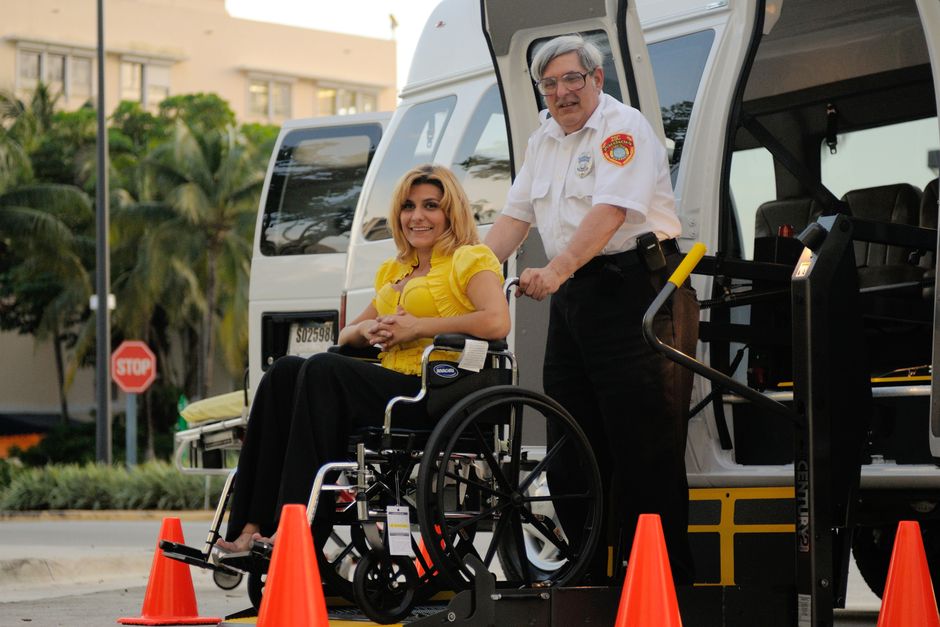
Not every patient can safely navigate a ramp.
Hydraulic lifts:
Reduce fall risk for bariatric and mobility‑restricted patients
Protect staff and family from lifting injuries
Keep transfers smooth from hospital exit to vehicle entry
Ask this:“Do you use hydraulic lifts for stretcher patients, and can you safely handle bariatric transfers?”
3. Bedside‑to‑Bedside Training and Patient Handling Skills
Your team should be more than “drivers.” They should be trained attendants who understand:
How to transfer safely from hospital bed to stretcher and from stretcher to home bed
How to protect fresh incisions, dressings, and IV sites
How to prevent skin shears and pressure points for fragile patients
How to work calmly with patients who are in pain, anxious, or fatigued
Ask this:“What specific training do your attendants receive for post‑surgical and high‑risk patient transfers?”
4. Real‑Time Dispatch, Scheduling, and Communication
Reliable hospital discharge transportation is built on communication:
GPS‑tracked vehicles and real‑time dispatch
Direct coordination with hospital discharge planners and case managers
Clear ETAs and text or phone updates to family
A defined pickup window (on‑time means slightly early, not late)
Ask this:“How do you coordinate with hospital discharge staff, and what pickup window do you guarantee?”
Why Standard Transportation Fails Hospital Discharge Patients
Feature | Specialized Stretcher NEMT | Standard Rideshare / Taxi | Ambulance (Emergency) |
Stretcher securement | Medical‑grade 4–6 point anchors | None | Yes, but reserved for emergencies |
Driver / attendant training | Patient handling, NEMT, bedside‑to‑bedside transfers | Basic driving / customer service | EMT / paramedic, emergency‑focused |
Cost | Moderate, non‑emergency medical | Low, non‑medical | Very high, often $800–$2,000+ per trip |
Scheduling | Pre‑booked for discharge time | On‑demand only, no hospital coordination | Emergency response only |
Equipment | Stretcher, lift, securement, climate control | Passenger seats and trunk only | Full emergency equipment, sirens, lights |
Bed‑to‑bed service | Yes (indoors at both ends) | No, curb‑to‑curb only | Usually curb‑to‑curb |
Best use case | Planned hospital discharge and home recovery transfers | Simple trips for ambulatory riders | True medical emergencies |
For post‑surgery, fragile, or stretcher‑dependent patients, “cheap” transportation can quickly become the most expensive option if it leads to a fall or complication.
Common Use Cases for Stretcher Hospital Discharge in Florida
Post‑surgical dischargesHip, knee, spine, abdominal, or cardiac surgery patients often cannot safely sit upright. Stretcher transport protects surgical sites and minimizes pain during the ride home.
Cardiac, stroke, and serious illness recoveryPatients leaving after heart attacks, strokes, infections, or ICU stays may be weak, dizzy, or unstable. Lying flat with proper monitoring is the safest choice.
Bariatric surgery and limited mobilityPatients with higher body weight or severe mobility limits can be injured trying to “make it work” in a regular car. Professional stretches and hydraulic lifts remove that risk.
Cancer treatment and complex oncology dischargesAfter major surgery, chemo, or radiation at centers like Moffitt, patients are exhausted and vulnerable. A quiet, climate‑controlled stretcher ride reduces stress and exposure.
Orthopedic and spine casesFresh joint replacements or spine surgeries need strict positioning. Stretcher transport keeps legs, hips, and backs aligned according to surgeon instructions.
The ROI of Safety: Why Cheap Discharge Rides Cost More
Trying to “save money” on hospital discharge transportation can backfire fast:
ER visit after a fall during transfer: $1,500–$3,000
Imaging (CT / X‑ray) to check for new injuries: $500–$2,000
Wound infection, reopened incision, or hardware complication: $5,000–$15,000+
Extended home care or rehab from delayed recovery: $2,000–$10,000+
A professional stretcher hospital discharge transportation trip in Florida typically costs a fraction of those numbers. The real return on investment is:
No dangerous lifting by family
No untrained drivers guessing how to move a fragile patient
No avoidable re‑admissions caused by transportation mistakes
What to Expect from Professional Stretcher Hospital Discharge Transportation
1. Pre‑Discharge Coordination
A good provider will:
Speak directly with hospital discharge staff
Confirm discharge time and location (room, unit, or lobby)
Understand mobility level, weight, and any restrictions
Ask about home access (stairs, elevator, narrow hallways, ramps)
Confirm that a family member or caregiver will be home at arrival
2. Hospital‑Side Transfer
At pickup:
The driver and attendant arrive early with stretcher and equipment ready
The team works with nurses to transfer from hospital bed to stretcher
Multi‑point restraints secure the stretcher to the vehicle floor
The patient is positioned for comfort and medical safety
The vehicle is climate‑controlled before departure
3. Smooth, Monitored Transport
During the ride home:
The driver follows routes that minimize bumps and sudden stops
The attendant monitors comfort and positioning
Family receives ETA updates by phone or text if requested
4. Safe Home Arrival and Bed Placement
At home:
The team navigates stairs, tight corners, and elevators safely
The stretcher is brought all the way into the bedroom or recovery space
The patient is transferred gently from stretcher to bed
Pillows and supports are placed according to discharge instructions
The family receives a quick handoff report about any special positioning or concerns
How to Book Stretcher Hospital Discharge Transportation in Florida
Booking early makes discharge day smooth instead of stressful.
Step 1 – Call During Discharge Planning As soon as discharge is being discussed, call 813‑924‑8156. Have:
Expected discharge date and time
Hospital name and unit
Home address and stairs / elevator details
Patient’s weight and mobility level
Any special equipment (oxygen, wound vac, etc.)
Step 2 – Confirm the Details24–48 hours before discharge, confirm:
Exact pickup time and location
Any changes in medical status
Family contact and who will receive the patient at home
Step 3 – Day‑of DischargeYour vehicle arrives on time with:
Sanitized stretcher and equipment
Trained driver and attendant
Direct communication with the discharge nurse
Step 4 – Home Arrival & HandoffWe:
Navigate your home safely
Handle the stretcher‑to‑bed transfer
Help you get the patient settled according to instructions
Frequently Asked Questions
Do you provide non‑emergency stretcher discharge transportation?Yes. We specialize in non‑emergency stretcher hospital discharge transportation for patients who cannot sit safely for the ride home.
How is this different from an ambulance?Ambulances are designed for emergencies and cost significantly more. Our focus is safe, scheduled, non‑emergency discharge transportation that emphasizes comfort and dignity.
Can you handle bariatric patients?Yes. Our lifts, stretchers, and staff are equipped and trained to safely manage heavier patients and complex mobility needs.
Can a family member ride along?In most cases, yes. We encourage a family member or caregiver to ride along when space and safety allow.
What areas do you serve?We provide stretcher hospital discharge transportation throughout Florida, including Tampa Bay, Brandon, Riverview, Wesley Chapel, Sun City Center, Sarasota, The Villages, Orlando, and more. Call to confirm availability in your area.
How far in advance should I book?We recommend booking as soon as discharge is anticipated—ideally 24–48 hours ahead. For urgent or same‑day discharges, call immediately to check availability.
Ready to Schedule a Safe Stretcher Discharge?
Hospital discharge is not the time to experiment with untrained drivers or unsafe vehicles. You only get one chance to bring your loved one home safely.
📞 Call 813‑924‑8156 today to schedule professional stretcher hospital discharge transportation in Florida.
Let us handle the transfer—so you can focus on recovery, not the ride.
Related Article:

Comments