


Non-Emergency Stretcher Service in Manatee County

If you or a loved one needs to get to a medical appointment but can't sit upright in a regular car, a non-emergency stretcher service in Manatee County is exactly what you're looking for. These services provide safe, professional transportation for people who require a reclined or flat position during the ride. Unlike an ambulance, stretcher service is private-pay, calmer, and designed for scheduled medical trips, not emergencies.
What Is Non-Emergency Stretcher Service?
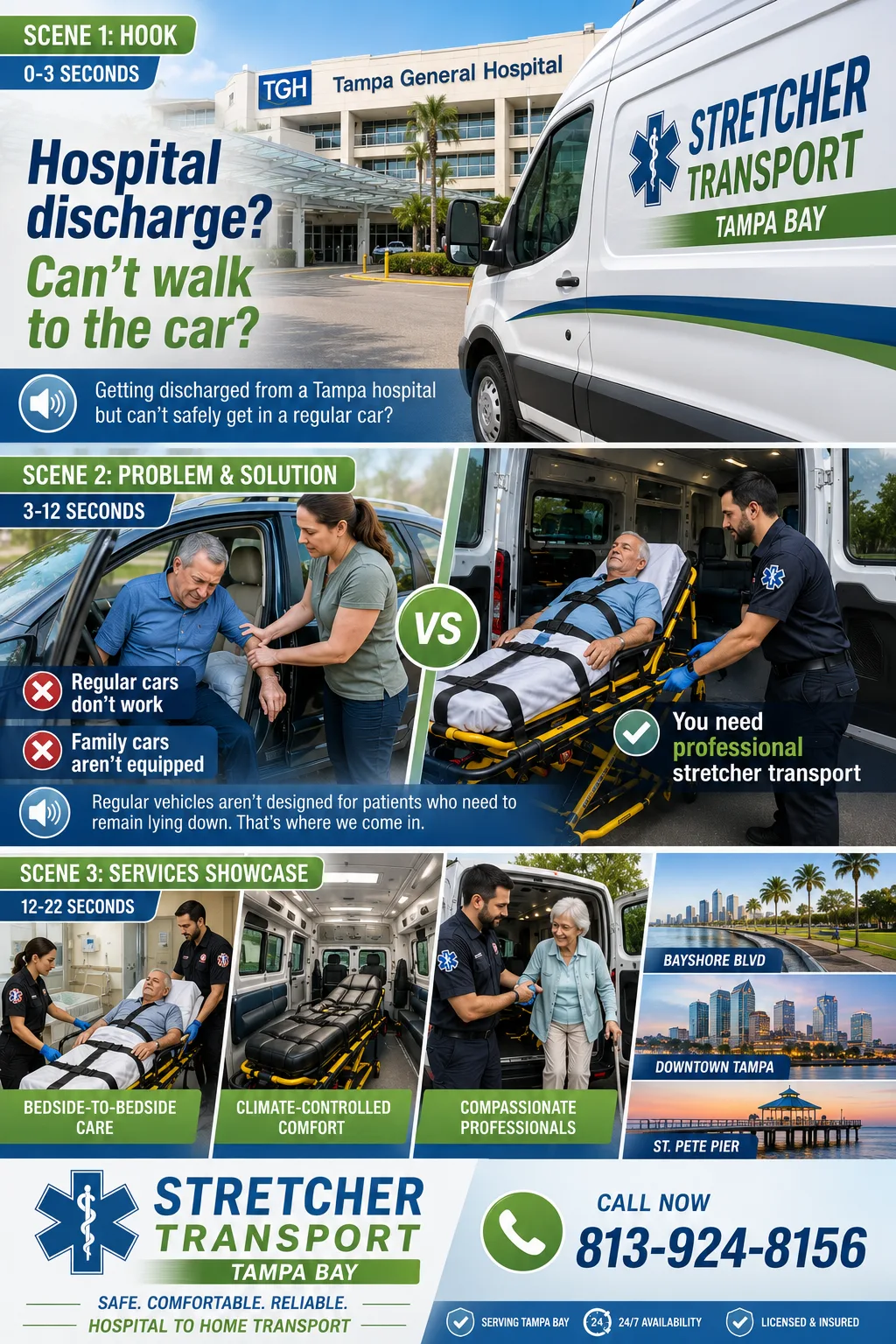
Non-emergency stretcher service is medical transportation specifically for people who can't sit upright. A stretcher ride includes a specially equipped vehicle with a hydraulic stretcher, climate control, and trained crew members who handle loading, transport, and unloading with care.
The key difference from emergency ambulance service: you book it in advance for appointments, discharge from hospital, dialysis, or other scheduled medical needs. There are no sirens, no lights, and no rush. It's dignified, professional, and focused on your comfort and safety.
When you call Wheelchair Tampa for a stretcher ride in Manatee County, you're getting a two-person crew that handles everything from your bedside to the destination—and back to your bedside when the appointment is done.
Who Needs Non-Emergency Stretcher Service in Manatee County?
Stretcher transport is right for you if any of these describe your situation:
You're recovering from surgery and can't sit upright yet.
You have a medical condition that requires you to stay reclined or flat.
You're too weak or in too much pain to sit in a regular car seat.
You're bariatric and need specialized equipment and crew support.
You have limited mobility and need help transferring in and out of a vehicle.
You're being discharged from the hospital and need safe transport home.
You're a senior with complex medical needs and family can't provide transport.
You need to get to dialysis, chemotherapy, or other recurring appointments.
The bottom line: if sitting upright is uncomfortable, unsafe, or impossible, stretcher service is what you need.
How Non-Emergency Stretcher Service Works in Manatee County
Here's what to expect from start to finish.
Step 1: Make the Call You contact the stretcher service and describe your medical needs. They ask about your mobility level, what type of appointment you need transport for, the pickup and drop-off locations, and any special equipment or assistance you need.
Step 2: Get a Quote and Book The service gives you pricing based on distance and complexity. You confirm the date, time, and any details about how to access your home or facility.
Step 3: Crew Arrives at Your Bedside Two trained crew members show up on time with the equipped stretcher vehicle. They're professional, calm, and ready to help you safely transfer onto the stretcher.
Step 4: Transport with Care They secure the stretcher, monitor your comfort during the ride, and transport you safely to your destination—whether that's a doctor's office, hospital, dialysis center, or home.
Step 5: Bedside Drop-Off When you arrive, the crew helps you transfer from the stretcher to your destination (your doctor's office, a bed, a chair) and makes sure you're settled before they leave.
Step 6: Return Transport They come back at the scheduled time and bring you home using the same safe, professional process.
Why Choose Professional Stretcher Service Over DIY Transport?
It's tempting to have family drive you, but professional stretcher service has advantages that matter for your health and safety.
A regular car isn't built for stretcher transport. Your body needs proper support during the ride. Potholes, sudden stops, and turns can cause pain or injury if you're not secured correctly. Professional crew members know how to position you, secure the stretcher, and handle the vehicle smoothly to protect you.
Family members often feel stressed trying to manage medical transport while also managing your care. Letting professionals handle it gives them peace of mind and lets them focus on being with you, not driving.
Medical appointments are hard enough without worrying about how you'll get there. When you use Wheelchair Tampa for stretcher service, the transportation piece is solved, and you can focus on your health.
Need wheelchair transportation?
What Makes Professional Stretcher Service Safe and Reliable?
Professional non-emergency stretcher services in Manatee County operate with strict safety and training standards.
Vehicles are licensed, maintained, and equipped with hydraulic stretchers, safety straps, and climate control. Crew members are trained in patient handling, basic CPR certification, and safe lifting techniques. They're background-checked and insured.
When you book with a reputable provider, you get reliability. They show up on time, they handle you with respect, and they know how to manage medical transport situations without panic.
Private-Pay Service: What You Should Know
One important fact: professional non-emergency stretcher service in Manatee County is private-pay only. This means you pay out of pocket. Insurance, Medicaid, and Medicare don't cover it.
Private-pay stretcher service is actually an advantage for you. There's no insurance paperwork, no pre-authorization delays, and no restrictions on when or where you can schedule transport. You book when you need it, and you go.
To find out what a stretcher ride costs for your specific trip, contact the service directly. Pricing depends on distance, time of day, and any special needs you have. They'll give you a quote before you commit.
Manatee County and Surrounding Areas Served
If you live in or near Manatee County, professional stretcher service is available to you. Services in the area cover the entire county and often extend into neighboring areas like Hillsborough, Polk, Highlands, and Hardee Counties.
Before you book, confirm that your pickup and drop-off locations are within the service area. Most providers are happy to tell you right away whether they can serve your route.
If you're in Pinellas County (including St. Petersburg or Clearwater), check with local providers in your area, as some services don't extend to that region.
How to Book Non-Emergency Stretcher Service
Here's the simple process:
Call ahead. Phone the stretcher service provider with your appointment date, time, and locations.
Describe your needs. Tell them your mobility situation, any equipment you use, and any special concerns.
Confirm the quote. Get pricing and confirm the schedule.
Prepare for pickup. Make sure you're ready at the scheduled time, and let crew know about any stairs, narrow hallways, or access issues they should know about.
Relax and ride. The crew handles the rest.
If you're in Manatee County and need help booking, you can also reach out to local community resources or your doctor's office discharge planner. Many healthcare facilities work with Wheelchair Tampa regularly and can coordinate transport as part of your discharge or appointment plan.
Stretcher Service vs. Wheelchair Service: What's the Difference?
Both are non-emergency medical transportation, but they're for different needs.
Wheelchair service is for people who can sit upright but need help with mobility—people using a wheelchair, walkers, canes, or who can't safely drive themselves.
Stretcher service is for people who can't sit upright. You need to stay reclined or flat for medical reasons.
Some providers offer both services in the same vehicle fleet. If you're not sure which you need, describe your situation to the service and they'll recommend the right option for you.
Questions to Ask Before Booking Stretcher Service
When you call a stretcher service provider, have these questions ready:
Do you serve my pickup and drop-off addresses?
What is the cost for my route and time of day?
How far in advance do I need to book?
Can you accommodate my specific medical needs (bariatric, post-surgical, oxygen, feeding tubes, etc.)?
Are your crew members CPR-certified?
What happens if my appointment runs late or gets cancelled?
Do you offer round-trip service?
Is the vehicle wheelchair/stretcher accessible?
Common Concerns About Stretcher Service
People often worry about cost, safety, and whether they really need it. Here's what you should know.
Cost: Yes, stretcher service costs more than a regular rideshare. But you're paying for specialized equipment, trained crew, and medical-grade transport. It's not a luxury—it's necessary care. Ask for a quote; most services are transparent about pricing.
Safety: Professional stretcher services meet safety and licensing standards. Your crew is trained, insured, and accountable. This is far safer than trying to transport yourself or relying on untrained family members.
Do I really need it? If your doctor says you shouldn't sit upright, or if sitting causes you pain or medical risk, the answer is yes. Trust your medical team and your own body.
What if I can't afford stretcher service?
If cost is a barrier, talk to your hospital discharge planner or social worker. Some hospitals have community resources, charitable programs, or partnerships that can help reduce the cost. Your doctor's office might also have recommendations. Don't skip transport because of cost—ask for help first.
Booking Your Stretcher Ride: Next Steps
If you're in Manatee County and ready to book non-emergency stretcher service, start by calling the provider. Have your appointment date, time, and location ready.
If you're working with a hospital, nursing home, or assisted living facility, your discharge planner or care coordinator can often arrange transport for you. They work with Wheelchair Tampa and other providers regularly and can smooth the whole process.
The goal is simple: safe, professional, dignified transport so you can focus on your health, not how you're getting to your appointment.
Frequently Asked Questions
Is non-emergency stretcher service covered by insurance?
Non-emergency stretcher service is private-pay only. Insurance, Medicare, and Medicaid don't cover it. You pay out of pocket, but there's no paperwork, no delays, and no restrictions on when or where you can go. Ask your provider for a quote for your specific trip.
How much advance notice do I need to book a stretcher ride?
Most providers prefer at least 24 to 48 hours' notice, but if you're in a time crunch, call and ask. Some can accommodate shorter notice depending on availability. If you're being discharged from a hospital, the discharge team can often arrange transport quickly.
What if my medical appointment takes longer than expected?
Tell the stretcher service provider upfront that your appointment might run long. They can adjust pickup time or hold the crew longer for a fee. Communication is key—don't wait until the last minute to update them.
Can stretcher service transport me if I have a feeding tube, oxygen, or other medical equipment?
Yes. When you book, describe any medical equipment or special needs. Trained crew members can accommodate oxygen, feeding tubes, catheters, and other equipment. Discuss it upfront so they come prepared and confident.
Need wheelchair transportation?



Comments