


How to Prepare Your Elderly Parent for Medical Stretcher Transport (Tampa Guide)


You’re trying to figure out How to Prepare Your Elderly Parent for Medical Stretcher Transport (Tampa Guide) because sitting upright isn’t an option—and you don’t want anything to go wrong on transport day. You need clear answers fast. What needs to be done? What can’t be missed? And how do you make sure your parent is safe, comfortable, and treated with dignity?
If you’re arranging stretcher transport in Tampa, this isn’t just logistics. It’s about reducing stress during an already emotional moment—often tied to a hospital discharge, serious illness, or limited mobility. Small mistakes can cause delays, discomfort, or unnecessary complications. That’s why preparation matters more than most families realize.
This How to Prepare Your Elderly Parent for Medical Stretcher Transport (Tampa Guide) walks you through exactly what to do—step by step—based on real-world medical transport experience in the Tampa Bay area. You’ll also see how stretcher transport connects with broader care decisions, including how to choose the right in home aide for your loved one once your parent arrives home.
By the end, you’ll know what to prepare, what to expect, and how to avoid the most common problems families face—starting with a simple checklist you can use right away.
Wheelchair Transportation for Seniors in Tampa Bay: Quick Stretcher Prep Checklist
Quick answer: To prepare your elderly parent for medical stretcher transport in Tampa, confirm the doctor’s transport order, share medical needs with the transport team, prepare paperwork and medications, dress your parent comfortably, and clear safe pathways at pickup. Doing these steps early prevents delays, discomfort, and last-minute cancellations.
To prepare your elderly parent for medical stretcher transport in Tampa, confirm physician orders and pickup details, gather medical paperwork and medications, dress your parent in loose clothing, manage bathroom needs, and clear home pathways. Communicate oxygen, IVs, or special positioning needs in advance to ensure a safe, on-time transport.
This How to Prepare Your Elderly Parent for Medical Stretcher Transport (Tampa Guide) starts with what matters most: what to do right now. Families who prepare early avoid rushed decisions, missed details, and unnecessary stress on transport day.
Use the checklist above as your baseline. The sections below explain why each step matters and how to apply it in real Tampa-area situations.
Wheelchair Transportation for Seniors in Tampa Bay: What Medical Stretcher Transport Really Means
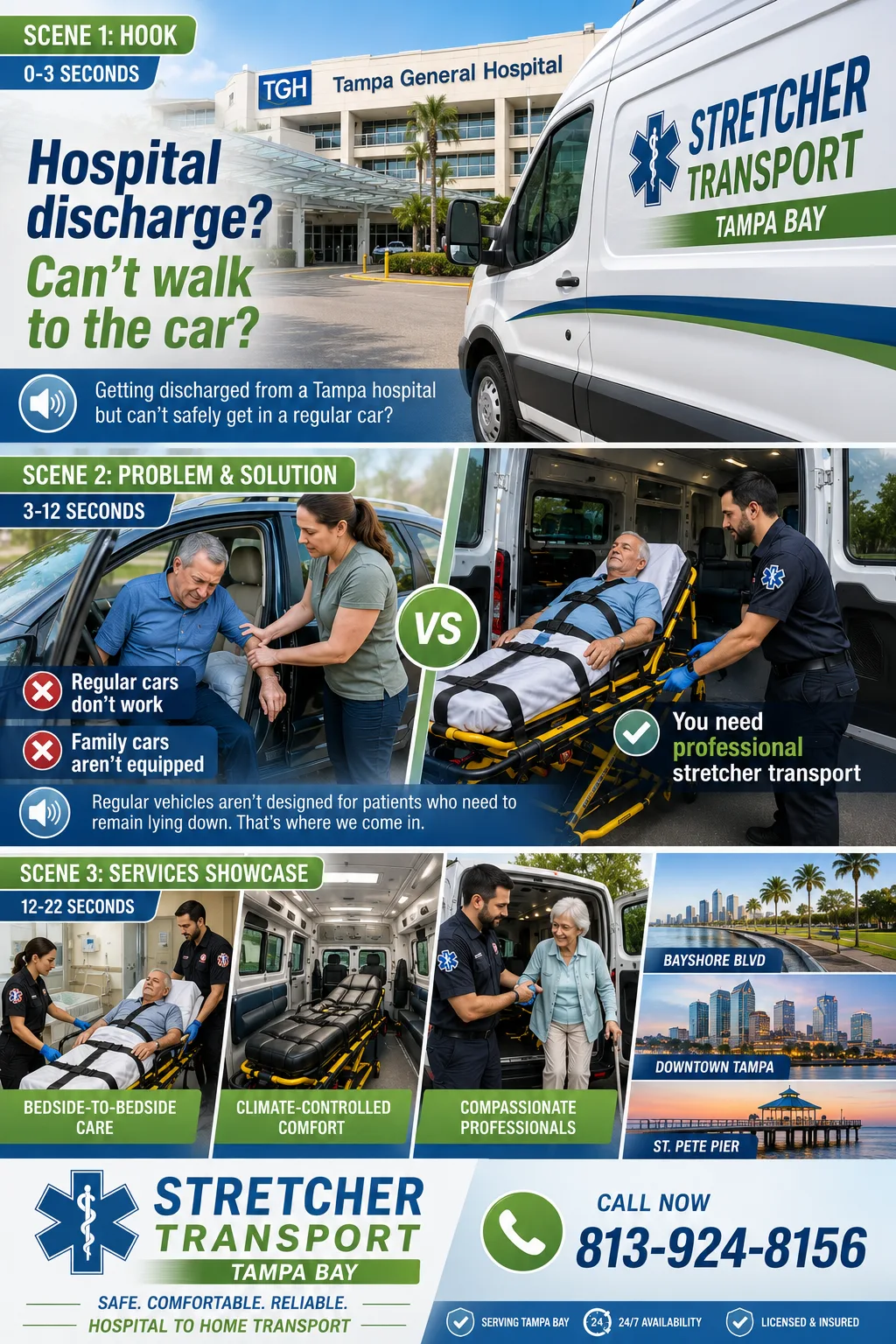
Medical stretcher transport is non-emergency transportation for patients who cannot safely sit upright. Your parent remains lying flat or semi-reclined on a secured stretcher, monitored by trained medical transport professionals from pickup to drop-off.
This is not an ambulance and not wheelchair transportation. It’s designed for stability, comfort, and safety when mobility, pain, or medical equipment makes sitting impossible.
Many families assume stretcher transport is only for emergencies. In reality, it’s commonly used for hospital discharges, rehab transfers, dialysis, oncology visits, and hospice care across Tampa Bay.
Understanding this distinction prevents booking the wrong service. Choosing stretcher transport when it’s medically required protects your parent and avoids last-minute refusals by facilities or drivers.
Wheelchair Transportation for Seniors in Tampa Bay: When Your Elderly Parent Needs Stretcher Transport
Your elderly parent typically needs stretcher transport if sitting causes pain, breathing difficulty, or medical risk. This often applies after surgery, serious falls, advanced weakness, or when oxygen, IVs, or wound care must stay in place during transit.
In Tampa, stretcher transport is frequently required after hospital discharge to home or rehab, transfers between facilities, and specialty appointments where long waits or travel times are involved.
If your parent cannot safely transfer into a wheelchair, cannot tolerate upright positioning, or has been ordered “stretcher only” by a physician, wheelchair transport is not appropriate.
When in doubt, ask the discharging nurse or physician directly. Clarifying this early is a critical step in How to Prepare Your Elderly Parent for Medical Stretcher Transport (Tampa Guide) and prevents costly delays on the day of transport.
Wheelchair Transportation for Seniors in Tampa Bay: Medical & Paperwork Preparation That Prevents Delays
Primary answer: Stretcher transport runs smoothly when medical orders, insurance details, and patient needs are confirmed before the pickup is scheduled—not the day of transport.
Start with the physician’s transport order. In Tampa hospitals and rehab centers, “stretcher required” must be clearly documented. Vague wording like “medical transport” can trigger delays or reclassification at pickup.
Next, gather and share critical details with the transport provider:
Current medication list
Oxygen flow rate and equipment type
IVs, catheters, wound vacs, or drains
Height, weight, and mobility limitations
Here’s what many families don’t realize: insurance timing matters. Medicare and secondary plans may require prior authorization, and approvals don’t always transfer between facilities. If coverage is unclear, plan for private pay upfront to avoid same-day cancellations.
A simple rule: if it affects how your parent lies, breathes, or moves, disclose it early. Transport crews can’t adapt safely without this information.
Wheelchair Transportation for Seniors in Tampa Bay: Physical Preparation That Protects Comfort and Safety
Primary answer: Physical preparation is about reducing pain, preventing complications, and keeping your parent stable from door to door—not just getting dressed.
Dress your parent in loose, layered clothing. Avoid tight waistbands, buttons near surgical sites, or shoes that slip off during transfer. Slip-on footwear with closed heels works best.
Bathroom planning is critical and often overlooked. Encourage bathroom use shortly before pickup. For longer transports, adult briefs or catheter checks prevent discomfort and embarrassment during transit.
Medication timing matters. Give pain or anti-nausea medications as prescribed unless told otherwise. Skipping them “just in case” often leads to unnecessary suffering during transport.
Pro tip from experienced crews: positioning instructions save time and pain. If your parent needs pillows under knees, head elevation limits, or pressure relief for sores, say it clearly in advance. Small adjustments make a big difference over Tampa traffic and longer travel distances.
Wheelchair Transportation for Seniors in Tampa Bay: The Hidden Factors That Decide Whether Transport Goes Smoothly
Here’s what families rarely hear—but experienced Tampa transport teams see every week: most stretcher transport problems don’t come from medical complexity. They come from handoff failures between facilities, homes, and transport crews.
Hospitals focus on discharge. Transport focuses on movement. Families are stuck in the middle. When no one bridges those priorities, details fall through—oxygen orders change, paperwork doesn’t match reality, or home access isn’t verified.
Tampa homes vary widely. High-rise condos downtown. Narrow doorways in older South Tampa homes. Split-level houses in Brandon and Riverview. If pathway clearance isn’t confirmed early, crews are forced to problem-solve under pressure. That’s when delays happen.
Another non-obvious truth: timing beats speed. Booking the earliest pickup often causes longer waits because discharge orders, medications, or authorizations aren’t ready. Coordinated timing—when paperwork, staff, and family are aligned—results in faster, calmer transports.
A practical framework that works:
Stability first (medical readiness)
Access second (home and facility logistics)
Movement last (the actual transport)
Apply this order and outcomes improve immediately. This approach reflects real-world conditions—not theory—and protects your parent’s dignity at every step.
Wheelchair Transportation for Seniors in Tampa Bay: Common Mistakes Families Make
Many families wait until the day of discharge to book transport. By then, options are limited and stress is high.
Others choose the cheapest option without confirming training, equipment, or stretcher capability. That decision often leads to cancellations or unsafe transfers.
Another frequent mistake is under-communicating medical needs. Oxygen, wounds, pain levels, and mobility limits must be stated clearly—even if they seem obvious.
Avoid these issues by planning early, asking direct questions, and confirming details in writing whenever possible.
Wheelchair Transportation for Seniors in Tampa Bay: Final Steps for Peace of Mind
Preparing an elderly parent for stretcher transport is about more than coordination. It’s about protecting comfort, reducing risk, and maintaining dignity during a vulnerable time. When medical readiness, physical preparation, and logistics are aligned, transport becomes calm and predictable instead of chaotic.
The key takeaway is simple: early communication prevents late-stage problems. Clear transport orders, honest disclosure of needs, and thoughtful home preparation work together. Skip any one of them, and stress increases. Get them right, and the entire process improves.
This How to Prepare Your Elderly Parent for Medical Stretcher Transport (Tampa Guide) was built around real Tampa conditions—local hospitals, traffic, housing layouts, and the challenges families actually face.
Right now, take one immediate step: review the checklist above and confirm your parent’s transport order and medical needs early. With the right preparation, you’re not just arranging a ride—you’re advocating for your parent’s safety, comfort, and peace of mind.
Related Articles:
https://www.wheelchair-tampa.com/wheelchair-stretcher-transportation-tampa-fl?utm_source=chatgpt.com



Comments