


How to book On Time Non-Emergency Medical Transportation Wheelchair Stretcher


Service Summary
Discover reliable, on-time non-emergency medical transportation for wheelchair and stretcher patients traveling to Moffitt Cancer Center in Tampa, including seamless airport-to-hospital transfers from Tampa International Airport (TPA). Our specialized wheelchair transport Tampa and stretcher transport Tampa services are built for cancer patients’ mobility needs, with flight tracking, gate escorts, and door-through-door assistance. Avoid delays and stress—book professional NEMT to Moffitt Cancer Center today so you can focus on care, not logistics.
Landing at Tampa International Airport for a critical Moffitt Cancer Center appointment shouldn’t turn into a scramble at baggage claim. But for wheelchair and stretcher patients, it happens all the time: long walks, confusing pickup zones, traffic, and a ride that’s late—or not equipped.
On-time non-emergency medical transportation for wheelchair and stretcher patients to Moffitt Cancer Center in Tampa is about protecting your treatment schedule and your body. You need the right vehicle, the right team, and timing that accounts for real-world delays.
Why specialized transport matters for Moffitt patients
Rideshares and taxis aren’t built (or permitted) to safely move stretcher patients or properly secure many wheelchair setups. They also don’t run medical-style coordination.
For cancer patients, the risk isn’t “inconvenience.” It’s missed check-in windows, extra physical strain, and avoidable stress on already hard days. Reliable NEMT to Moffitt must account for:
Flight delays and late gate arrival
Airport escort coordination
Tampa traffic patterns at peak times
The correct Moffitt entrance for your appointment type
Mobility and medical equipment needs (oxygen, IV pole, wound vac, etc.)
Wheelchair vs. stretcher transport: choose the right level
This is where families mess up and pay for it.
If you’re not sure what you need, read this first: stretcher transport vs. wheelchair ambulance
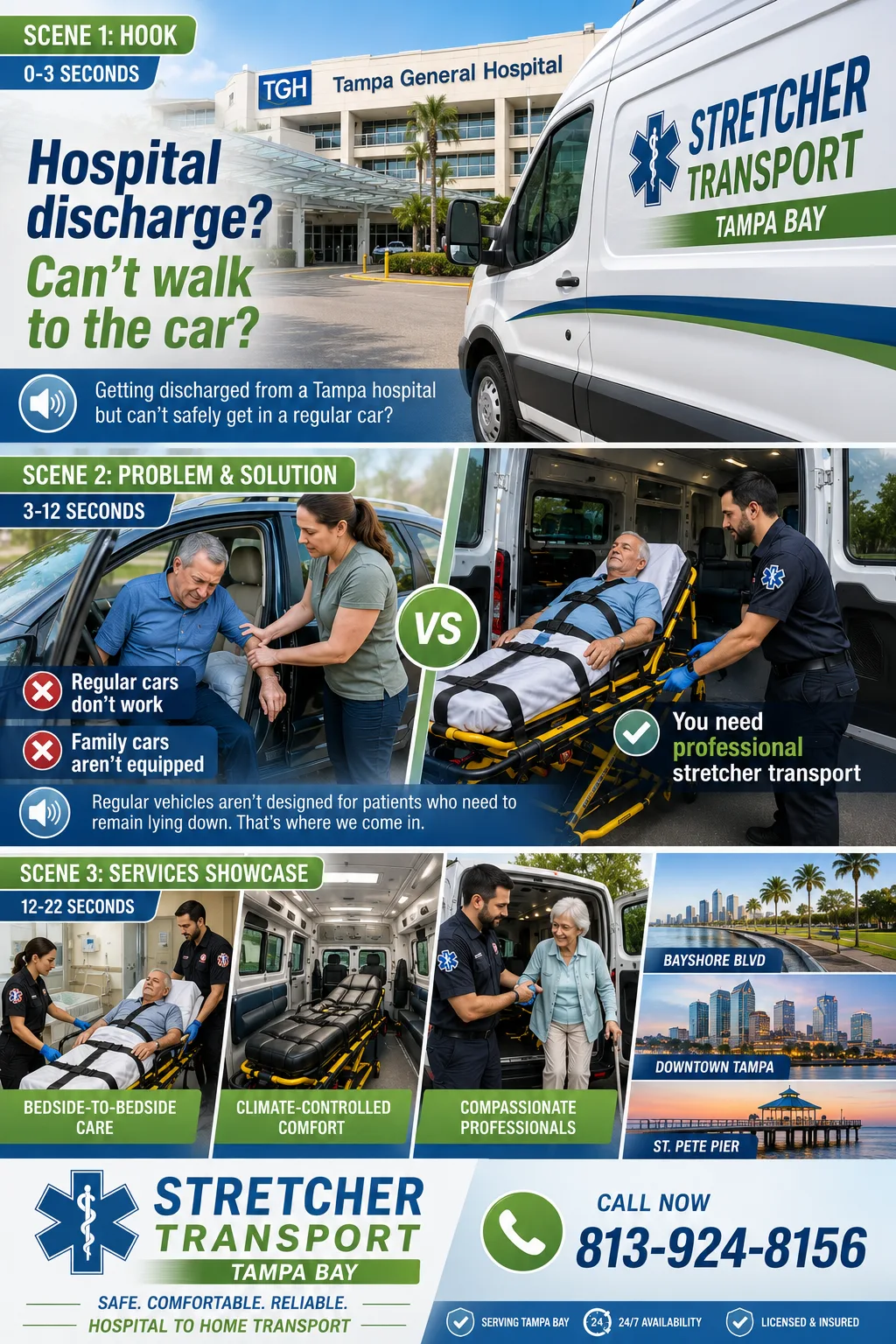
Stretcher transport is for patients who cannot sit upright safely (pain, post-op restrictions, severe weakness, contractures, advanced disease). It requires specialized equipment and securement.
Wheelchair transport is for patients who can remain seated safely and can transfer with or without help. Booking the wrong service isn’t just uncomfortable. It can be unsafe. It can also trigger delays when the wrong vehicle shows up.
Our fleet: built for safety, comfort, and punctuality
“Medical transport” shouldn’t mean a passenger van with a ramp and a prayer.
Here are the types of wheelchair-accessible vehicles we offer (so you know what’s actually arriving):
What matters for patients:
Proper securement (not improvised straps)
Smooth ride to reduce pain and fatigue
Climate control (heat sensitivity is real for many patients)
Space for equipment (oxygen, bags, mobility devices)
Backup planning so a mechanical issue doesn’t become your problem
Tampa Airport (TPA) to Moffitt: the logistics most companies miss
The route is simple on a map. It’s not simple in real life.
Airport pickups fail when companies don’t plan for:
Terminal congestion and pickup-zone rules
Escort timing and where the handoff happens
Real landing time vs scheduled arrival time
Traffic spikes (especially weekday mornings and late afternoons)
We follow a dedicated Moffitt Cancer Center transportation protocol here:
That protocol focuses on one goal: you arrive early enough to breathe, not barely on time and stressed.
Step-by-step booking (do it like this)
Step 1: Book when the appointment is scheduled
Don’t wait until the day before. Late booking = fewer options, more risk.
Step 2: Share the details that decide the vehicle
Provide:
Wheelchair vs stretcher need (and transfer ability)
Weight/size considerations (bariatric needs)
Equipment: oxygen (flow rate), IV pole, feeding pump, wound vac
Any positioning restrictions
Appointment time + required check-in time
Flight info (airline + flight number) if arriving via TPA
Step 3: Request airline assistance (if flying)
Ask the airline for wheelchair assistance / escort service ahead of time. It reduces walking, confusion, and delays.
Step 4: Get driver + vehicle details before pickup
You should know: driver name, vehicle type, and the pickup plan (gate/curb/meeting point).
Step 5: Real-time communication
You shouldn’t be hunting for your ride. Your ride should be tracking you and coordinating pickup based on actual progress.
Critical mistakes that derail on-time arrival
Booking too late: You remove all buffer and increase failure risk.
Not disclosing needs: Wrong vehicle = delay, or unsafe transport.
Cutting it too close: If you schedule pickup with zero margin, traffic will win.
Ignoring insurance timing: Some plans require pre-authorization. Start early.
Beyond the ride: what “reliable” should include
Reliability isn’t “the van arrived.” Reliability is the whole chain working.
Look for:
Door-through-door help (when needed)
Clear communication with caregiver/family
Handling of medical devices and equipment without rushing you
Consistent, predictable process (not improvising every trip)
Insurance, Medicaid, and cost transparency
If you’re using insurance or Medicaid, the biggest issue is usually paperwork timing and what the plan actually covers.
A competent company should:
Verify coverage before the trip (not after)
Explain any out-of-pocket clearly
Provide receipts/itemization when needed (HSA/FSA, reimbursement)
Help with pre-authorization steps when required
Patient & caregiver checklist
48 hours before
Confirm appointment time + building/department
Request airline assistance/escort (if flying)
Confirm insurance requirements (if applicable)
Confirm transport plan + pickup location
24 hours before
Pack equipment list + physician notes (if provided)
Charge devices (phone + medical device backups)
Share flight updates (if flying)
Day of travel
Keep driver/dispatch contact info accessible
Don’t rush transfers—rushing causes falls and pain spikes
Aim to arrive early enough to settle before check-in
Real talk: remove the stress from a day that’s already heavy
If your appointment matters (and at Moffitt, it does), your transportation can’t be “hopefully it works out.”
Ready to book on-time wheelchair or stretcher transportation to Moffitt Cancer Center?
Call 813-924-8156 and lock it in with a plan that matches your medical needs and timing.




Comments