



How to Book Medical Transportation in Tampa: A Complete Guide

If you or a loved one needs a ride to a doctor's appointment, hospital discharge, dialysis center, or specialist visit in the Tampa Bay area, you're probably wondering how to book medical transportation quickly and safely. The good news: the process is straightforward, and you have clear options to get reliable help.
Medical transportation isn't the same as calling a rideshare app. When mobility is limited, when you're recovering from surgery, or when you need bedside-to-bedside care, you need trained staff, specialized equipment, and vehicles designed for safety. That's where booking through a dedicated medical transportation provider makes all the difference.
Here's how to get it done.
Step 1: Know What Type of Transportation You Need
Before you book, clarify what you actually need. Are you using a wheelchair and need someone to help you transfer safely? Are you on a stretcher and unable to sit up? Do you need assistance getting ready, or just a safe ride?
Understanding your mobility needs helps you explain your situation clearly when you contact a provider. If you're unsure, that's okay—call and describe what's going on, and the staff can guide you.
Step 2: Call Directly to Schedule Your Ride
The fastest way to book medical transportation in Tampa is to call. When you call, you'll speak to someone who can answer your specific questions, confirm your medical needs, and lock in your reservation on the spot.
Have ready:
Your pickup location (home, nursing home, hospital, etc.)
Your destination (doctor's office, dialysis center, hospital, etc.)
The date and time you need the ride
Your mobility situation (wheelchair, stretcher, assistance needed)
Any special requests or medical equipment you use
Phone booking works especially well for advance appointments—surgery prep, routine dialysis sessions, or follow-up visits you know about weeks in advance. It also handles urgent situations: many providers can accommodate same-day or next-day transportation requests if you call ahead.
Step 3: Book in Advance Whenever Possible
If your medical appointment is scheduled, book your transportation as soon as you confirm the date and time. Advance booking gives you peace of mind and ensures a vehicle is reserved for you.
For planned trips like dialysis (which happens on a regular schedule), recurring specialist visits, or hospital discharge, calling a week or more ahead is ideal. You'll have a confirmed pickup time, a clear driver assignment, and no scrambling on the morning of your appointment.
Even if your appointment is tomorrow or the day after, most medical transportation providers can work with you. Just call and explain your timeline.
Step 4: Confirm Your Booking Details
Once you've booked, confirm that the provider has recorded:
The correct pickup address and entry instructions (apartment number, which door, etc.)
The destination address and any special instructions (ask for a specific entrance, wait in the lobby, etc.)
Your phone number and the phone number of a family member or caregiver
Any medical equipment or accessibility needs (wheelchair, stretcher, oxygen, etc.)
The estimated pickup time
Get a confirmation number or reference number. Write it down. If anything changes, you'll need it to reach the provider quickly.
Step 5: Understand Private-Pay vs. Insurance-Based Services
Here's a critical detail: not all medical transportation services work the same way. Some accept Medicaid, Medicare, or private insurance. Others operate on a private-pay model.
Wheelchair Tampa is a private-pay medical transportation service. This means you pay directly for the ride—no insurance billing, no Medicaid processing, no waiting for approval. It's straightforward: you book, you get transported, you pay.
Need wheelchair transportation?
Private-pay services often give you faster booking, more flexible scheduling, and personalized attention because you're the direct customer. There's no insurance authorization delay.
Step 6: Know Your Service Area
Before you book, confirm that the provider serves your location. Medical transportation providers don't operate everywhere—they're limited by geography and logistics.
Wheelchair Tampa covers Hillsborough, Polk, Manatee, Highlands, and Hardee Counties. If you're in one of those areas, you're in service. If you're in Pinellas County (including St. Petersburg or Clearwater), you'll need to contact a different provider.
Always double-check the service area before you book. If you're on the edge of a service zone, call to confirm—address-level details matter.
Step 7: Prepare for Pickup Day
On the day of your appointment, be ready a few minutes early. Have:
Your confirmation number handy
Your phone charged
Any medical information or paperwork you need for your appointment
A caregiver or family member present if possible
Easy access to your pickup location (door unlocked, pathway clear)
Medical transportation providers are trained to handle transfers safely, but they work best when you're ready and the environment is accessible. If you use a wheelchair, make sure it's within arm's reach. If you need help getting to the door, let the driver know.
Step 8: Ask About Stretcher Transport If Needed
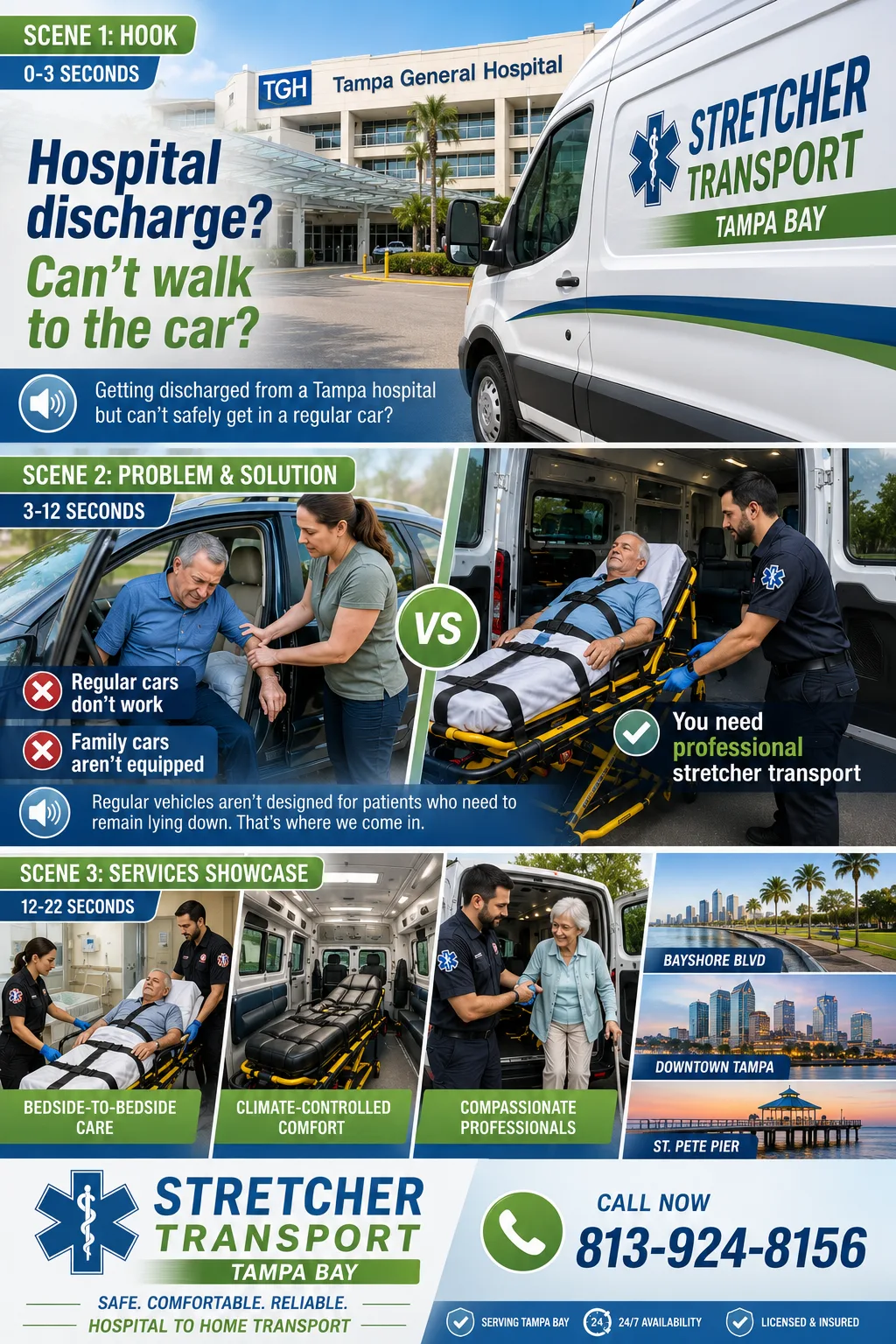
For patients who cannot sit up—post-surgery recovery, severe mobility limitations, or bedrest orders—stretcher transport is available through medical providers. Stretcher transport uses a two-person crew and provides bedside-to-bedside care, meaning staff assist you from bed to vehicle and from vehicle to destination.
If you need stretcher-level care, mention it when you book. This affects crew size, vehicle type, and scheduling, so the provider needs to know upfront.
Step 9: Ask About Staff Training and Safety Standards
You have the right to know who's transporting you and what training they have. Professional medical transportation providers employ CPR-certified staff who understand patient safety, mobility assistance, and medical equipment. Their vehicles are clean, well-maintained, and equipped for wheelchair accessibility or stretcher security.
When you call to book, ask about staff credentials and vehicle safety features. A trustworthy provider will explain this openly.
When to Book Medical Transportation vs. Calling 911
There's an important distinction: medical transportation and emergency ambulances serve different needs.
Call 911 if someone is experiencing a life-threatening emergency: chest pain, difficulty breathing, severe injury, stroke symptoms, or loss of consciousness. Emergency ambulances are equipped for critical interventions and lights-and-sirens transport.
Book medical transportation for non-emergency needs: routine doctor visits, scheduled dialysis, post-discharge rides home from the hospital, specialist appointments, and recurring medical trips. These rides are safe, professional, and reliable—but they're not emergency response.
Special Situations: Hospital Discharge and Nursing Home Transport
If you're being discharged from a hospital, your discharge planner or social worker can help coordinate medical transportation. Let them know your needs early—they often work with transportation providers and can streamline the booking process.
If you live in a nursing home or assisted living facility, the facility's case manager or administrator may arrange transportation for you. They'll work directly with the provider to schedule regular medical trips.
For private arrangements—when you're handling your own transportation—call a medical transportation provider directly and explain your situation. They're used to discharge pickups and know how to assist patients who are still recovering.
Getting a Quote and Final Booking
Pricing for medical transportation depends on distance, vehicle type, crew size, and specific medical needs. Rather than guess, call and describe your situation. The provider will give you an accurate quote.
When you call, have your pickup and destination addresses ready. The provider can calculate the fare, explain what's included, and answer payment questions on the spot.
Wheelchair Tampa provides quotes based on your specific transportation needs. Call to discuss your appointment, get pricing, and book your ride.
Key Takeaways for Booking Medical Transportation in Tampa
Call directly—it's the fastest and most reliable way to book.
Book in advance whenever possible, especially for scheduled appointments.
Know your service area before you call—confirm the provider covers your location.
Understand whether you need wheelchair or stretcher transport.
Clarify your pickup and destination to ensure smooth scheduling.
Choose private-pay or insurance-based services based on your preference and coverage.
Confirm all details: address, time, medical needs, and phone numbers.
Ask about staff training and vehicle safety standards—you deserve to know.
Frequently Asked Questions
Can I book medical transportation same-day in Tampa?
Yes, many medical transportation providers can accommodate same-day or urgent requests if you call ahead. However, advance booking (at least a day or two) gives you better availability and peace of mind. If you have an urgent appointment, call as soon as possible and explain your timeline. The provider will let you know if they can fit you in.
Do I need to provide medical information when I book?
You'll need to describe your mobility situation—wheelchair, stretcher, walking with assistance—so the provider sends the right vehicle and crew. You don't need to provide detailed medical history, but relevant mobility details help ensure safe, appropriate transport. For example, mentioning that you use oxygen or have a recent surgical incision helps the crew prepare.
What if my appointment time changes after I've booked?
Call the provider as soon as you know your appointment has been rescheduled. Use your confirmation number to reference your original booking. Most providers can adjust your pickup time or reschedule for a different date with minimal hassle. Don't assume—always confirm the change directly.
Can family members or caregivers ride along?
Yes, most medical transportation vehicles have room for a companion or caregiver to ride with you. Mention this when you book so the provider knows how many passengers to expect. This is especially helpful if you need assistance at your appointment or want family support during transport.
Need wheelchair transportation?



Comments