


Hospital Rides in Tampa: What You Need to Know

Hospital rides mean different things depending on where you're going and what kind of help you need. If you're being discharged from the hospital, need to get to dialysis, or require transport after surgery, you're probably looking for a reliable ride that's safe, professional, and equipped to handle your mobility needs. This guide breaks down your actual options.
What Exactly Are Hospital Rides?
Hospital rides are specialized transportation services designed to move patients who need assistance getting to or from medical facilities. They're not ambulances with sirens. They're not rideshare apps. They're professional medical transport vehicles staffed by trained staff who know how to help passengers with wheelchairs, walkers, stretchers, and other mobility devices.
Hospital rides serve specific purposes: discharge from the hospital, trips to appointments, dialysis sessions, specialist visits, post-surgery transport, or moves from one care facility to another. The vehicles are equipped with lifts, securing systems, and safety features that a regular car or taxi simply doesn't have.
Non-emergency medical transportation exists specifically to help patients access healthcare when they can't drive or use public transit safely. That's the core mission.
Types of Hospital Rides Available
Not all hospital rides are created equal. Your needs will determine which type makes sense.
Wheelchair Transport
This is for passengers who can sit upright, transfer independently or with minimal assistance, and use a wheelchair or walker. The vehicle has a hydraulic lift and securement systems. One trained attendant typically handles the loading, securing, and unloading. Your wheelchair travels with you.
Stretcher Transport
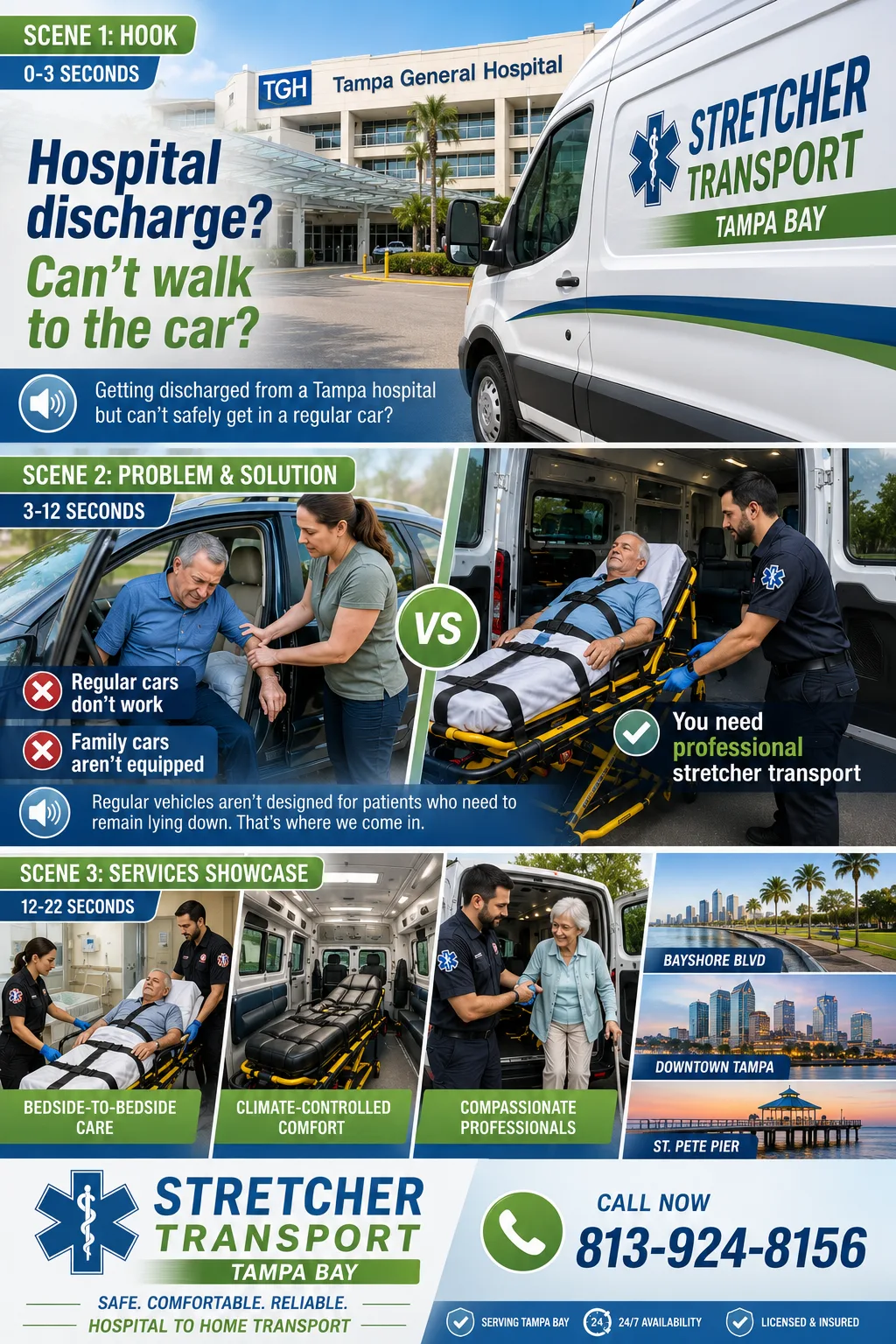
If you need to stay lying down during transport, stretcher transport is the option. This requires a two-person crew for safety and bedside-to-bedside service. One person drives while the other stays with you. The stretcher is secured in the vehicle, and vital monitoring or basic comfort needs can be addressed during the ride.
Companion Seating
Most hospital rides allow a family member or caregiver to ride along. This is especially valuable for elderly patients, post-surgery clients, or anyone who needs emotional support during transport. You're not making the trip alone.
How to Arrange Hospital Rides in Tampa Bay
The process depends on where you're starting from and who's coordinating your care.
From the Hospital
Before you're discharged, ask the hospital discharge planner or social worker about transportation options. They often work with local medical transport services and may have recommendations. Have them contact the provider directly to arrange your pickup time, location (usually the lobby or discharge area), and any special needs.
From Home for an Appointment
Call your medical transportation provider directly. Many accept advance booking so you can schedule a ride days or even weeks ahead. You'll give your pickup address, destination, appointment time, and any mobility equipment you use.
From a Nursing Home or Assisted Living Facility
Many facilities coordinate transport for residents. Ask your case manager or the facility's administrator which providers they partner with. Some facilities have standing arrangements for routine appointments like dialysis or oncology visits.
If you're in the Tampa Bay area and need reliable, professional hospital rides, Wheelchair Tampa provides private-pay non-emergency medical transportation across Hillsborough, Polk, Manatee, Highlands, and Hardee Counties. Call to discuss your specific transportation needs and get a quote.
Need wheelchair transportation?
Who Pays for Hospital Rides?
This is critical to understand upfront. Payment structure varies widely.
Insurance and Government Programs
Some Medicaid and Medicare managed care plans include non-emergency medical transportation (NEMT) as a covered benefit for eligible members. Coverage typically applies to medically necessary appointments. You'll need to verify with your plan whether your specific appointment qualifies and whether you must use an in-network provider.
Private Pay
Many patients pay out of pocket for hospital rides. This is especially common for same-day discharge requests, flexible scheduling, or service in areas where NEMT coverage is limited. Private-pay services operate independently and typically charge per ride or by hourly rates.
Facility or Healthcare Provider Coverage
Some hospitals, dialysis centers, and specialty clinics subsidize or arrange transport for their patients. Ask directly whether your appointment location offers transport assistance.
Questions to Ask Before Booking Hospital Rides
Get clear answers on these points before committing:
Is the vehicle equipped with a wheelchair lift or stretcher?
How many staff members will be present during transport?
Can I bring a companion or caregiver?
How far in advance do I need to book?
What happens if my appointment runs late?
Is the service available on the day and time I need?
What's the pricing structure and payment method?
Are there cancellation policies or fees?
These details matter. You want certainty, not surprises on pickup day.
Safety Standards for Hospital Rides
Professional medical transportation providers follow strict safety protocols. Vehicles should be inspected regularly, lifts should be tested, and staff should have training in patient transfer, safety restraints, and basic medical response.
When evaluating any hospital ride service, ask about driver background checks, vehicle maintenance records, staff certifications, and insurance coverage. Legitimate providers are transparent about these details because patient safety is the foundation of their business.
Avoid services that downplay safety or equipment. A wheelchair lift isn't optional. Proper securement isn't optional. Trained staff who know how to handle transfers safely isn't optional. Wheelchair Tampa operates with these standards as the baseline, not the exception.
When to Use Hospital Rides vs. Other Options
Use hospital rides when:
You use a wheelchair or walker and need a vehicle with a lift
You need to stay lying down during transport
You're recovering from surgery or illness and shouldn't sit in a standard car seat
You're traveling from a hospital or medical facility
You need a trained attendant present during the ride
Don't use hospital rides for:
General errands or shopping trips (unless the service explicitly offers that)
Situations where a family member with a standard vehicle is available
Non-medical destinations
Service Area Matters
Not every hospital ride service operates everywhere. Coverage gaps exist, especially in rural areas or between counties. If you're in the Tampa Bay region, verify that your chosen provider actually serves your location before booking.
Hospital rides work best when you plan ahead. Don't wait until discharge day to figure out transportation. Ask your care team early, get options in writing, confirm the details, and confirm again the day before your appointment. This takes stress off you and ensures you make your appointment on time.
Arranging Hospital Rides for Elderly or Post-Surgery Patients
If you're arranging transport for someone else, involve them in the decision. Discuss comfort preferences, any anxiety about riding, and whether they want a family member present. Some patients worry about transferring in and out of vehicles. A good provider will explain exactly how the process works and answer every question.
For post-surgery patients, coordinate with the surgical center or hospital about timing. You typically can't drive after anesthesia, so hospital rides remove that risk entirely. For elderly passengers, having a trained staff member handle loading and unloading reduces fall risk and gives everyone peace of mind.
If you need help arranging hospital rides in the Tampa Bay area, Wheelchair Tampa works directly with hospitals, nursing homes, assisted living facilities, and individual patients. Call to discuss your situation and get clarity on pricing, availability, and the booking process.
FAQs About Hospital Rides
Can I use a rideshare app like Uber or Lyft instead of hospital rides?
Not safely if you need mobility assistance. Rideshare drivers aren't trained in patient transfer, their vehicles don't have lifts or securing systems, and most policies don't allow medical transport or assistance with mobility devices. Hospital rides exist specifically because standard transportation isn't equipped for these needs. If you're recovering, using a wheelchair, or need any assistance, a professional medical transport service is the right choice.
Do I need a doctor's order to book hospital rides?
No. You can call and book directly. Some insurance coverage requires a referral or doctor's certification that the trip is medically necessary, but that's only if you're trying to use insurance. Private-pay services don't need approval. Hospital discharge planners often coordinate on your behalf, which is fine too. Either way, you're in control of the booking.
What if my appointment runs longer than expected?
Call your transport provider and let them know. Some providers charge hourly rates, so an extended wait might add to your cost. Others have flat rates per trip regardless of wait time. Clarify the policy before you book so there are no surprises.
Are hospital rides available on nights and weekends?
It depends on the provider. Some operate 24/7. Others have limited hours. Ask about your specific date and time when you book. For overnight or weekend needs, confirm availability as soon as you know the appointment is scheduled.
Need wheelchair transportation?



Comments